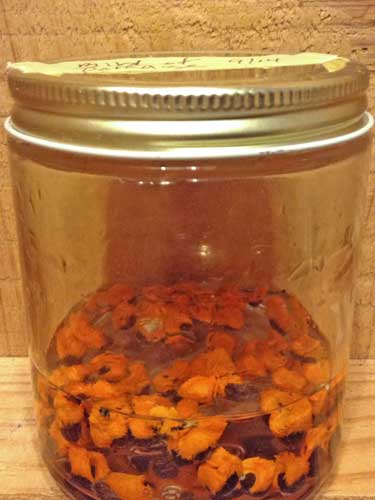
Glycerin Test Results

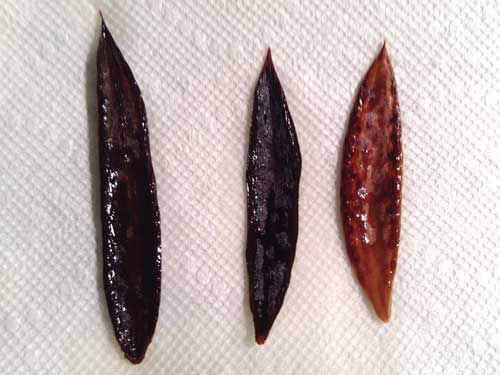
I removed the plant parts from the water and glycerin solution after 4 hours.

Test Water Glycerin

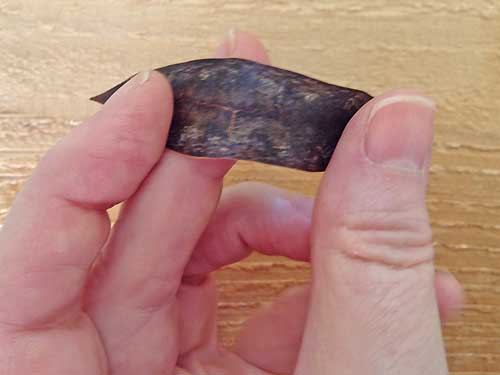
The next morning after they dried, I noticed they were definitely more pliable.

Test Water Glycerin Bend

Not easy taking a photo with an iPad of your own hand while holding something.

I removed a test from the denatured alcohol and glycerin solution after 16 hours. It was inflexible and snapped.

Test Alcohol Glycerin

I suspect the alcohol solution would be better for preserving the plant parts, rather than for my purposes. The jar does not take up much space so I will check them daily for improvement.


Slat Book Progress…

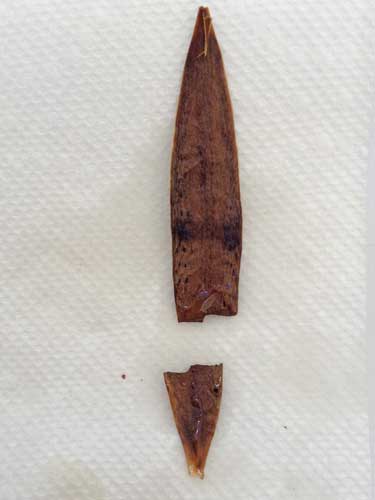
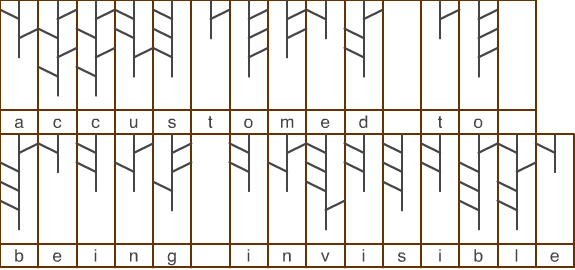
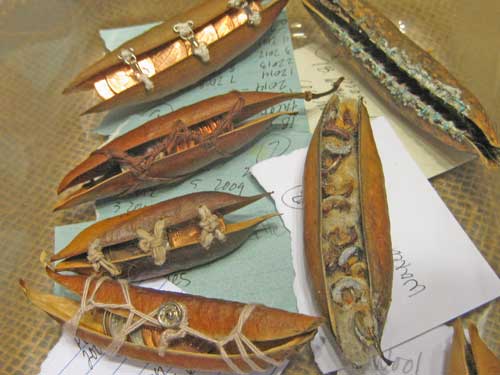
I have been planning to make a slat book using the middle bit (ovary) from Pandorea jasminoides seed pods. I planned the code, “accustomed to being invisible” that will be stitched onto the plant bits.

Invisible Code

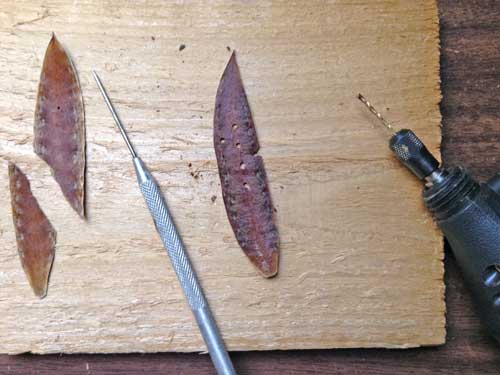
Holes in Pandorea jasminoides

I used a needle tool to make holes in one piece. The piece fractured in half.
I then used a Dremel to drill holes. When I started stitching, with nettle, part of the edge broke away.


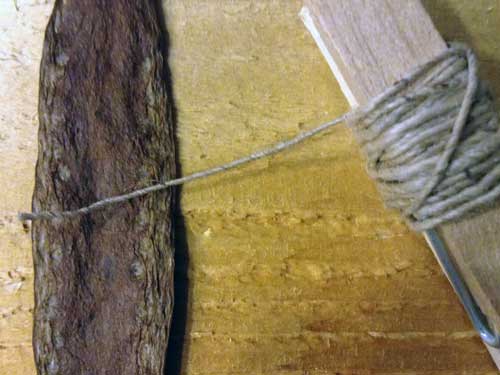
This is what the nettle twine looks like with the Pandorea jasminoides bits.
Nettle


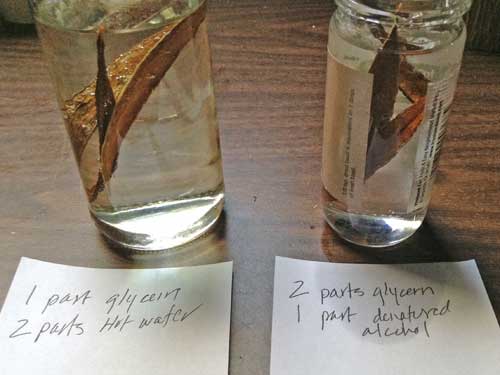
I decided to give glycerin a go to soften the pieces and to make them able to take the stitching. I am trying to solutions–one with hot water and one with denatured alcohol.

Tadpole

The jar on the left is a solution of 1 part gylcerin and 2 parts hot water.
The jar on the right is a solution of 2 parts glycerin and 1 part denatured alcohol.

It is interesting that many processes do require waiting. Sometimes a process can be sped up, most of the time patience is required.


Agave

Agave Leaves

Current State of Many Agave Leaves

Top of the Agave

Top of the Agave Has a Tilt

Agave Seed Pod

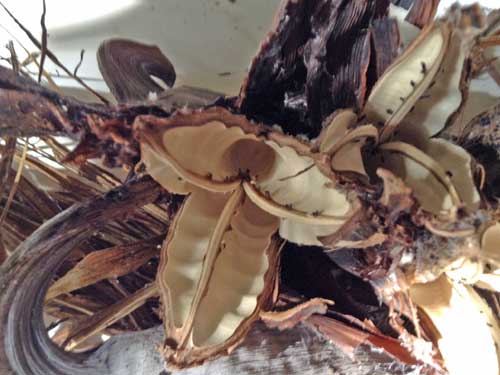
Inside of an Agave Seed Pod


There are loads of critters living on and around the agave. The spider in the following photo has a huge web between sections of the agave. When the spider saw me, it tucked in its legs. When I moved in for a closer look, it skittered to its hiding space among some seed pods.

Agave and Spider

Spider Living in Agave


Bird of Paradise Seeds: Planting Day

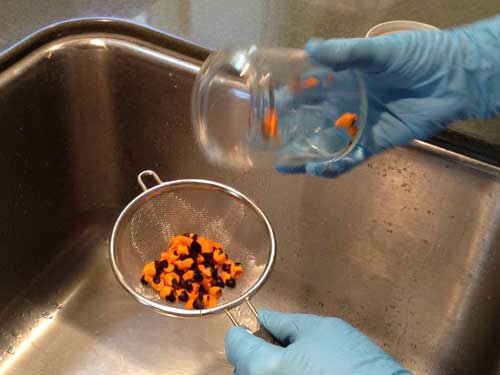
Seeds Poured Into Screen

Seeds Poured Into Screen

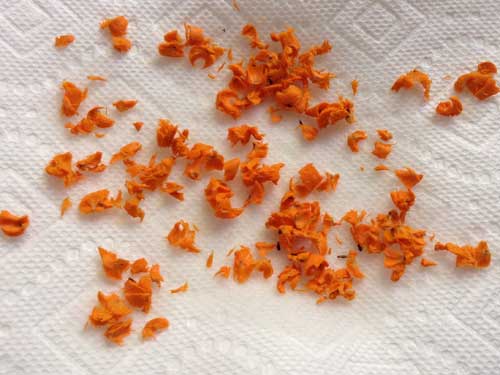
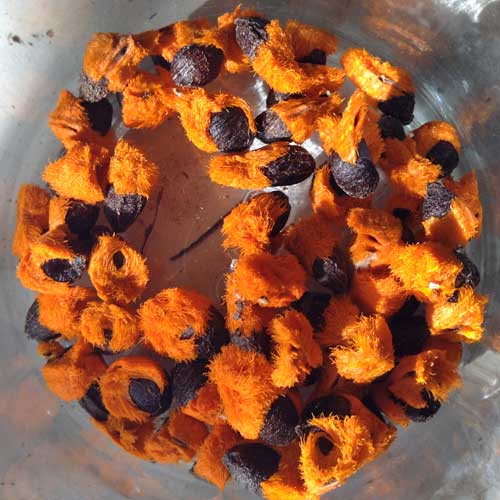
Removed Orange Spongy Cover

Removed Orange Spongy Cover

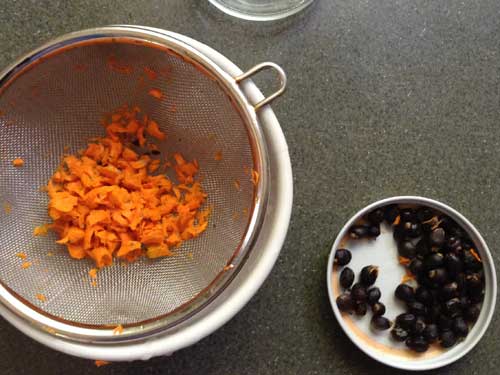
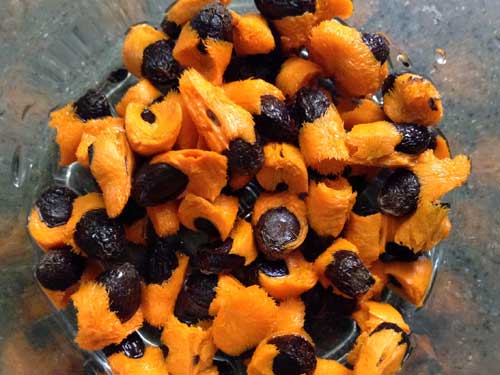
Seeds and Removed Orange Spongy Cover

Seeds and Removed Orange Spongy Cover

Removed Orange Cover Left to Dry

Removed Orange Spongy Cover Left to Dry

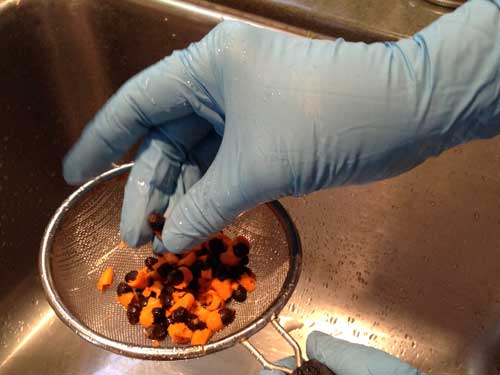
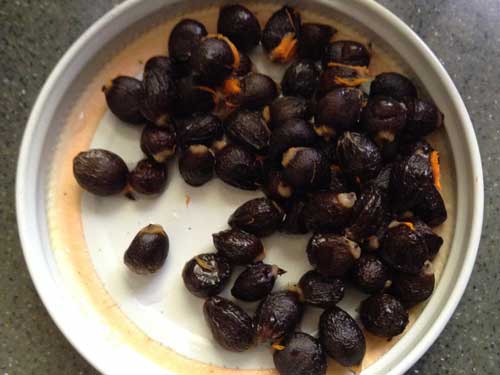
Seeds Prior to Rinsing

Seeds Prior to Rinsing

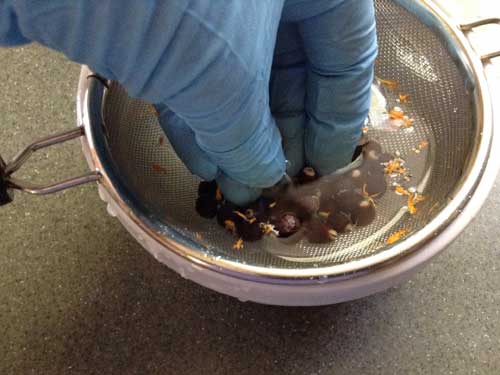
Rinsing the Seeds

Rinsing the Seeds

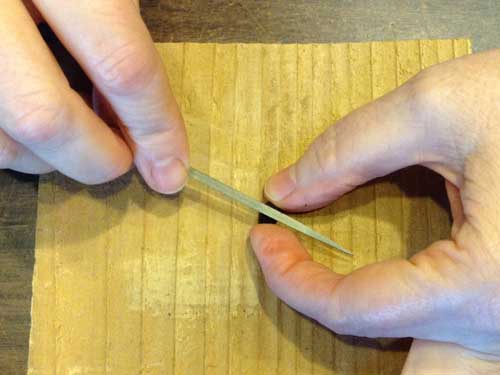
Scarred Seeds with a File

Scarred Seeds with a File

Planted 36 Seeds in Cactus Mix

Planted 36 Seeds in Cactus Mix


Used a clothes pin to label the plantings because the blue jays living in my garden like to remove any type of easily pulled out stick label.

Planted the remaining 25 seeds directly into the garden.

Now I wait.


Slat Book in Progress

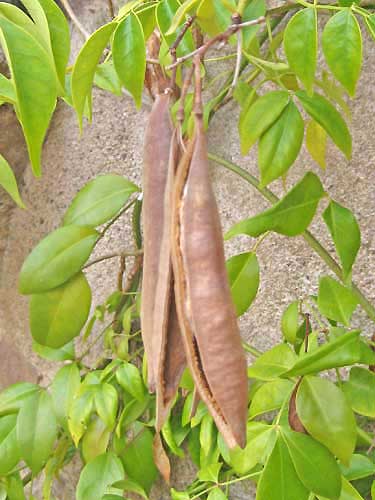
I snagged some Pandorea jasminoides seed pods from a friend’s garden. They are woody and beautiful.

Pods

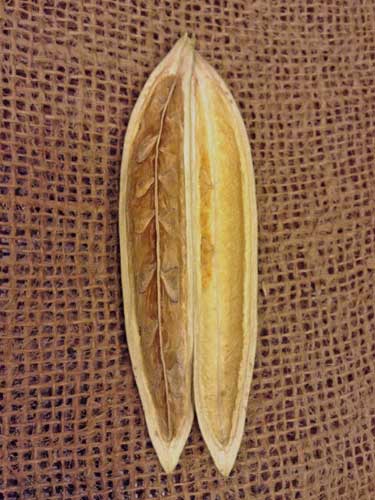
Open Pod

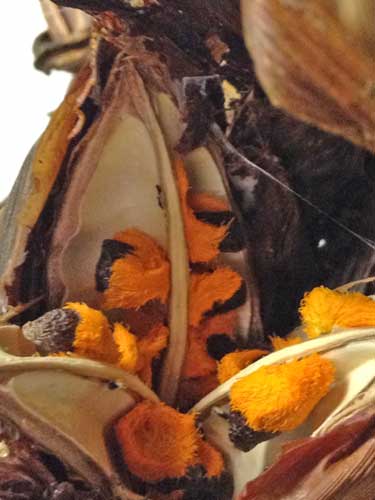
Open Pod Exposing Seeds

Pod Interior

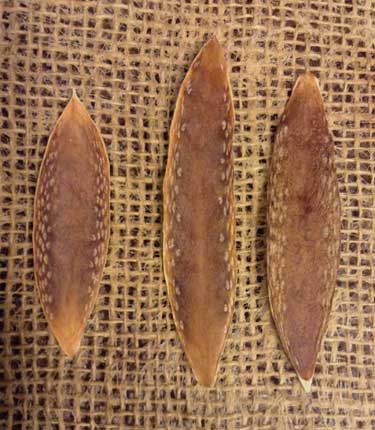
Pod, Seeds Removed, With Interior Part


The pods have been used in my Change series.

Change Series


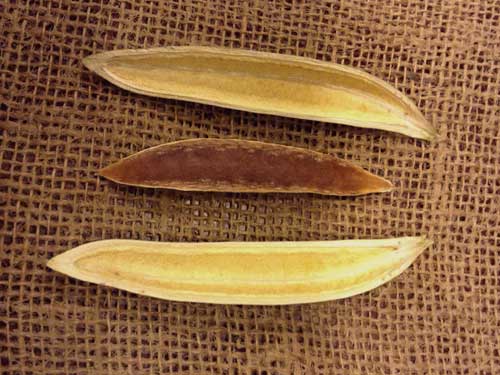
I kept the interior bits and seeds for possible future use.

Interior Bits

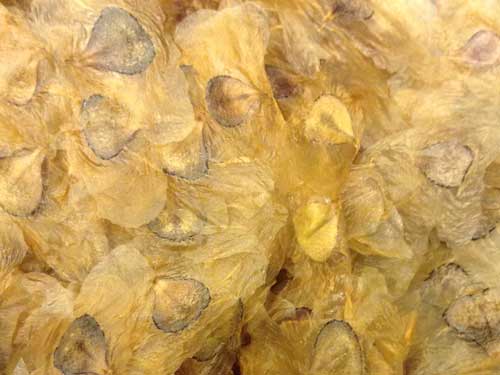
Seeds

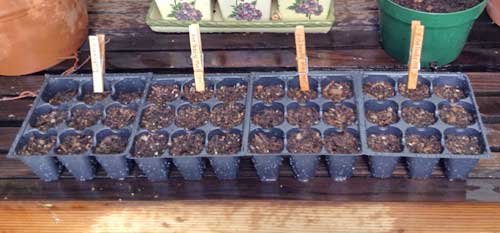
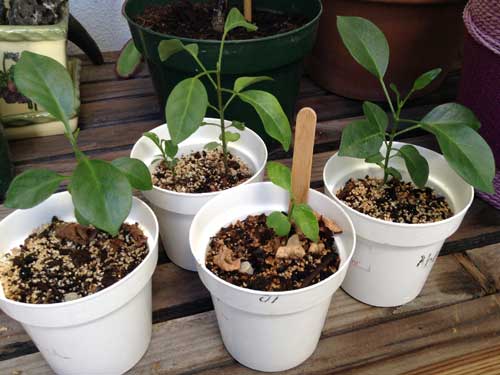
Curious if the seeds were viable, so I planted a few–

Seedlings


I kept thinking about the interior bits. How could I use them? Recently ran across reference to slat books in one of my sketch books.

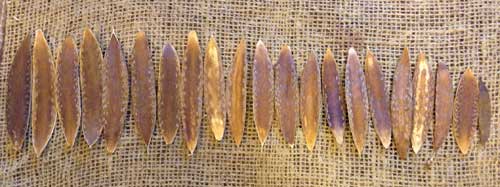
So, I selected the bits with the most interesting light lines.

Parts


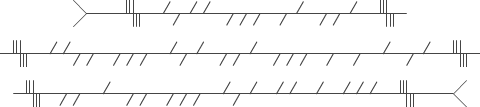
The plan is to stitch a letter on each bit, then stitch them together. I had thought about using Ogham or A-tom-tom code, but for various reasons they didn’t feel right. Instead I made a stitch pattern based on Morse code. I actually made three versions. This is the phrase: Long forgotten memory.

Code for Long Forgotten Memory

For the slat book, I am deciding between the phrases, link with the past and accustomed to being invisible. Probably will use bamboo cord or Egyptian cotton thread for the stitch work.


When I quickly searched for the two types of code that I decided not use, I realized that both times I hit Omniglot, the online encyclopedia of writing systems and languages. It is a great site with loads of information.


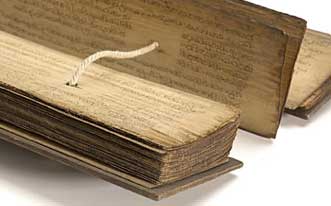
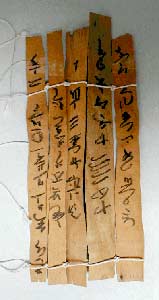
Strip or Slat books were made of a variety of material–bamboo, bark, and palm leaves. The material was cut into slats. The slats were either bound together or holes were made and cord was threaded through binding the slats together.


Information about the history of books and slat books can be found on the
Harry Ransom Center, The University of Texas at Austin website.

Slat Book


Information on Horizontal and Vertical Writing in East Asian Scripts can be found on Wikipedia.

Writing in vertical columns from right to left facilitated writing with a brush in the right hand while continually unrolling the sheet of paper or scroll with the left.


A brief description about slat books and a nice image can be found on Susan Kapuscinski Gaylord’s website makingbooks.com.

Slat Book


Information on early Chinese inscriptions can be found on Jeremy Norman’s website historyofinformation.com.


A Nice Surprise–Bird of Paradise Seeds

I have two studio spaces: one in the house for fairly clean work, and one in the garage for messy work. I keep most of my plant cuttings in the garage.

Recently, I took some cuttings from a giant bird of paradise. I thought it would be fun to remove all of the interior bits and do some stitch work on the remaining vessel.

Bird of Paradise Cuttings

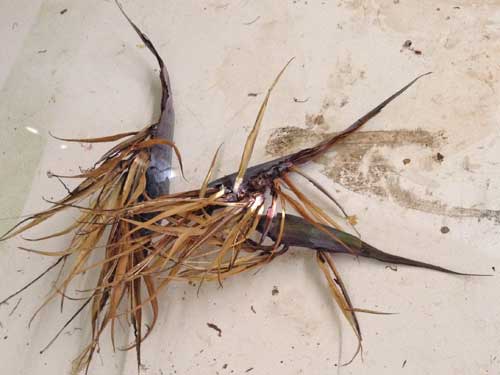
They have been drying for nearly a month. Today I found the seed pods dried, open, and gorgeous seeds were visible.

Bird of Paradise Seeds

Nature has many colorful surprises. The orange covering on the seeds feels a bit spongy.

I was curious if I could have success planting the seeds. I read several articles and it seems easy peasy. Pop the seeds in water for two to three days. Change water daily. Then drain, remove all of the orange fiber, dry, and scar the seeds. Pop them in some soil and keep moist. Maybe in a month of so there might be seedlings.

So, I removed all of the seeds and placed them in a jar.

Bird of Paradise Seeds

Empty Seed Pods

The empty seeds pods are lovely.

Seeds in Water

Seeds in water day one.


Eroded Contours

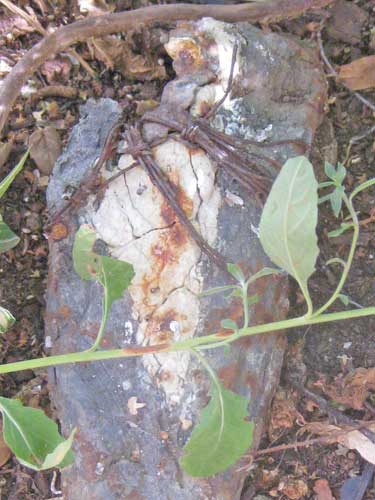
Some 20 plus years back I made a series titled, Eroded Contours. It was a process oriented series. The pieces were meant to be hung on the wall, but one of the pieces found a home in my garden.
Eroded Contours

The Process–

1. Made a plaster mold of a large philodendron leaf. Used it dry as a press mold for a mid-range stoneware body. Pulled several pieces. Fired them in a high bisque, cone 5. Broke them into pieces.

2. Used the same plaster mold wet to pull waxes.

3. Inserted some of the broken ceramic pieces into the waxes keeping in mind that the ceramic pieces could shift when the wax burns out.

4. Gated, then invested the lot.

5. Sent the investments through the burnout.

Potential problems–
1. Would there be a shift in the position of the ceramic pieces as the wax burned out?
2. What would happen to the ceramic pieces when hit with molten bronze?
3. What would happen when the bronze and ceramic pieces cool?
4. What would happen to the ceramic pieces embedded in bronze during the breakout?

Everything went quite well. Better than anticipated. Some of the fired ceramic pieces did fracture. A few bits were lost in the process.

When the fracture was more than I wanted, I mixed up a batch of Egyptian Paste to use as a filer. The plan was to glaze and fire the lot, so the addition of a cone 016 paste was compatible with the glaze temperature.

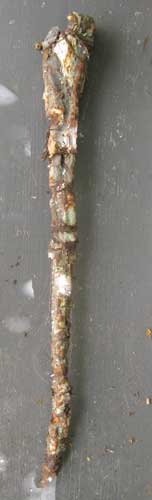
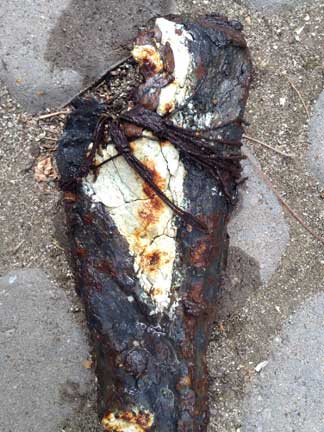
This is how the piece looked when removed from the garden. The pieces are long and quite narrow so a bit difficult to get a decent image.
Eroded Contours

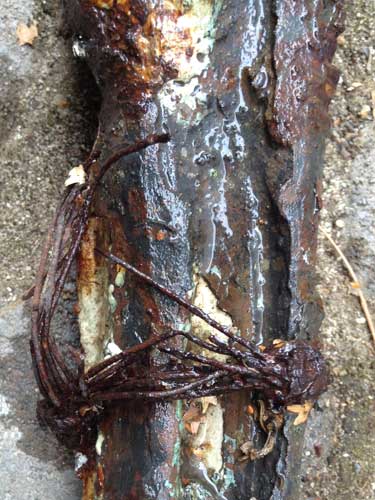
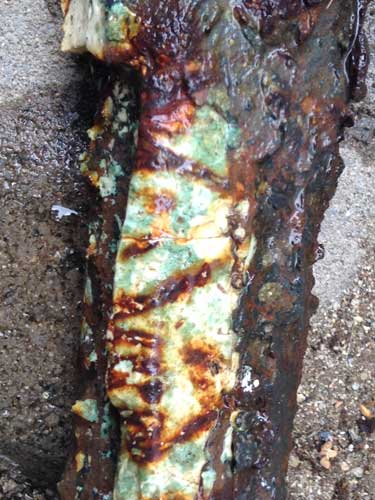
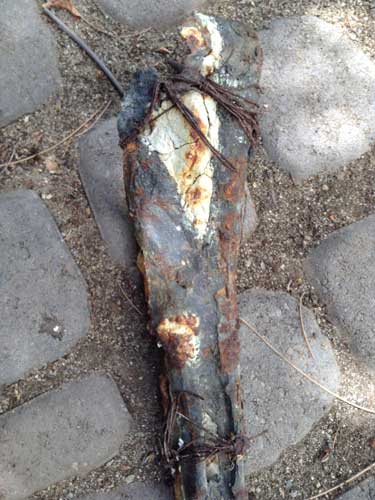
The majority of the piece is bronze. The whitish areas stained with rust from the oxidized wire. I had forgotten that some of the pieces also had wire. The wire was bound on prior to the glaze fire. Firing the wire made it a bit fragile and after years in the garden, some of the wire was broken and missing.

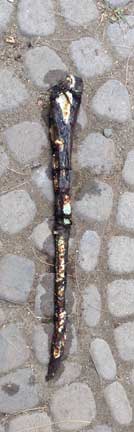
I was curious if the rust stain was permanent, so I washed the piece with a solution of water and epsom salt.
Washed Piece

Washed Detail 1

Washed Detail 2

Some of the wire has vanished, but left its mark.
Washed Detail 3

This is how the piece looks after it dried overnight.
Dried

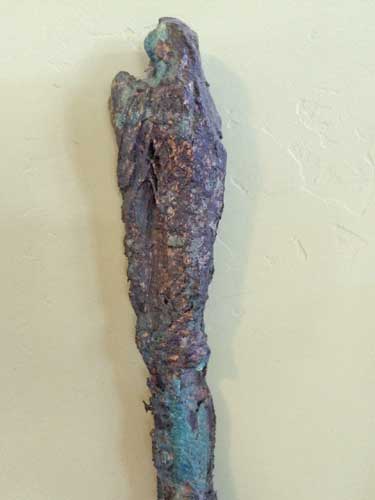
This is the detail of another piece in the series–
Blue Piece Detail


This bronze vessel has been moved around in my garden several times. Can’t quite figure out where to put it. It was constructed of palm cuttings and jute twine. Waxed the twine, then gated and invested the piece.
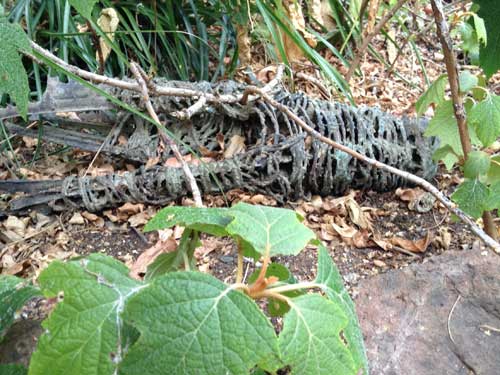
Bronze Vessel

There is always the possibility when doing a direct burn-out that some of the material will not burn-out completely or some ash will remain and prevent a good pour.

After the pour and break-out, a low-fire glaze was applied. Then the piece was fired to cone 015.


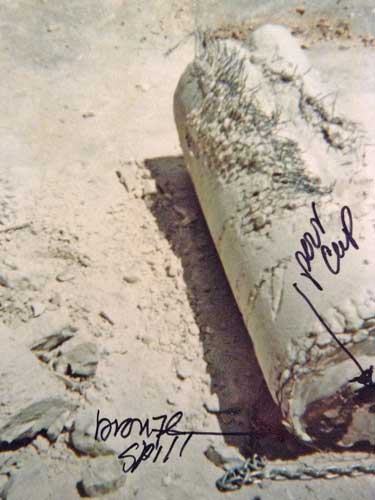
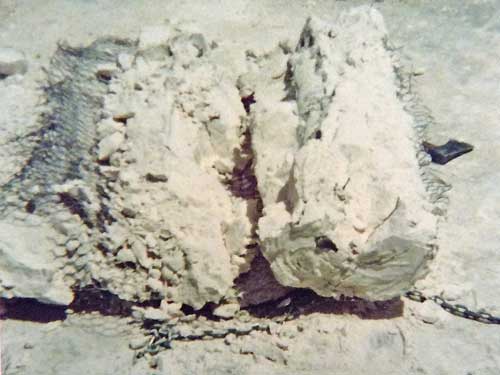
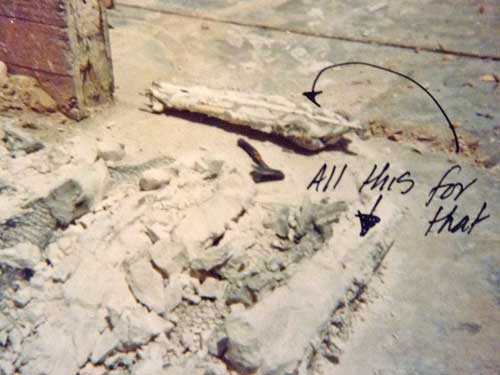
These are a few of the photos that I took the day of the Eroded Contours pour and break-out. A chain was used to pull the investments from the pit. And a fork lift was used to remove them from the foundry.

The length of the largest piece was 4.5′.
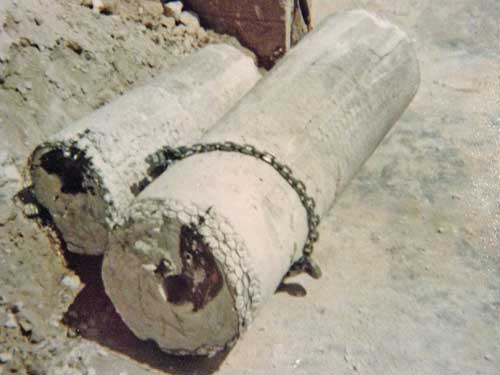
Investments

Investments

Break-out

Break-out

Break-out

Break-out


Powdery Mildew

A month ago I bought a begonia boliviensis. Very beautiful plant. I had’t even popped it in the ground yet, when I noticed the flowers were dropping. According to what I read that is not uncommon.
Begonia

Then I noticed powdery mildew. A small bit of powdery mildew can be seen in the upper most leaf. I couldn’t remember how to treat it, so I googled it. Everything I read stated that the plant should be destroyed.

I contacted a friend and he suggested:

“…a mixture of 8oz isopropyl alcohol (70%), 8oz water, 1 Tbsp Dr. Bronners Peppermint castille soap. It works really well on arthropod pests but also has a slight fungicidal effect. Fairly non-toxic to boot.”

I do love peppermint soap, so I gave it a try. Shortly after the application all of the leaves dropped.

This week I started to feel a bit positive about saving the plant. There are a few new leaves.

Begonia after treatment

The leaves appear to be healthy and clear of powdery mildew. Now I wait.