Potentially Dangerous Can Be Beautiful

I recently snagged some Oleander pods from the parking lot of a neighborhood restaurant. In California it is common to have plantings in parking lots.

Oleander has a reputation for killing people and animals. Some stories have a valid science component, others lean toward myth and urban legend.

The pods I snagged have dried and opened exposing their lovely seeds.

Oleander Pod with Seeds

Why did I snag the seed pods? I use poison plant bits in my work. Some of the bits that I use are from plants banned in a few states. The reason for the ban is reactionary. A couple of kids decide to get high, use too much, have a bad reaction, and the plant is held responsible.

Each of the cups in my Poison Cup series has a small bag of bits from poisonous plants. These are a few of the bags included in the series.

Seed Bags

The title of the series is actually Preservation. While the cups refer to the tea ceremony and poison goblets, the cups have been perforated making them a nice vessel for seedlings.


PC09

Treat with Respect contains the seed bag in the upper right corner of the above graphic.
The bag contains 11 Castor Bean seeds.

Additional image of the series can be seen on my website.


Nerium (Oleander)

Fatal Wienie Roast

Oleander Poisoning

ASPCA

The Poison Garden Website

The Merck Veterinary Manual


Aphids, Lichens, Rust, Mold…

Aphids and Lichens

Aphids and Lichens

Yesterday I found a few of my Hellebores were covered with aphids. How does that happen? I had just purchased a bottle of peppermint castile soap and decided to give the plants a washing and a cutting.

The lichens were seen on stones in the mountains behind our house. I have taken photos of loads of lichens but never red.

Aphids and Lichens

Rust and Mold

A rose bush very near the Hellebores has small orange splotches. I didn’t know it was rust until I did a google search. According to the Royal Horticultural Society what I found is probably the parasitic fungus, Phragmidium tuberculatum. More cutting will be needed.

The rose bush, actually more of a vine was here when we bought the house. We keep digging it up, attempting to move it, apparently never getting it all because it keeps coming back.

The mold is growing on a container of tomato and basil hummus. The container was hidden behind a large dish of couscous.

Why did I take photos of such things? It is interesting to see surfaces transformed in a natural way. There can be beauty in things that are opportunistic and even a bit destructive. Something small can make a difference.

Lichen on Fence

I had lovely gardens that took a lot of care. Recently I decided that I needed to spend less time in the gardens and more time in the studio. There isn’t enough time for everything. Strong plants should survive. Since I have found multiple things to damage the existing plants and trees, I suspect it is time to clear out everything potentially damaging and tend to the plants and trees that remain.

We finally did take down a tree that had been sick for quite a few years. Tried to save it because it was being grown for a source of art material. It is a sad day when a tree must be removed. Trying to think of the future and that we can use the space to grow dwarf citrus trees. I do love a good orange, but I am sure going to miss the tree.

Seeping Tree


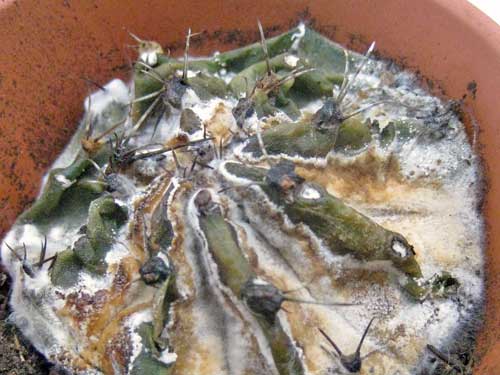
The Death of a Sad Plant or Sad Death of a Plant

There are plants that live with us for years. Their beauty brings joy and perhaps even a sense of well being.

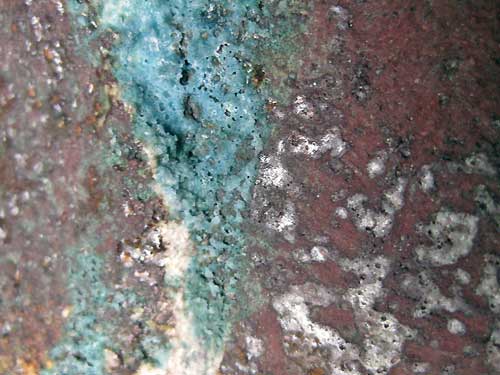
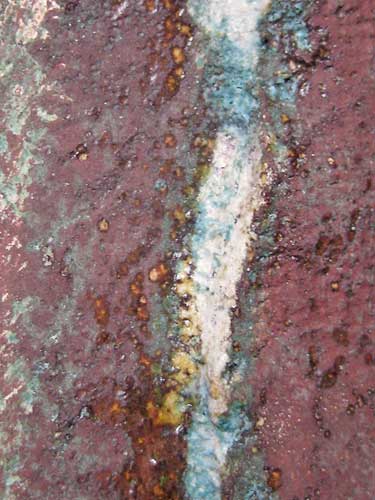
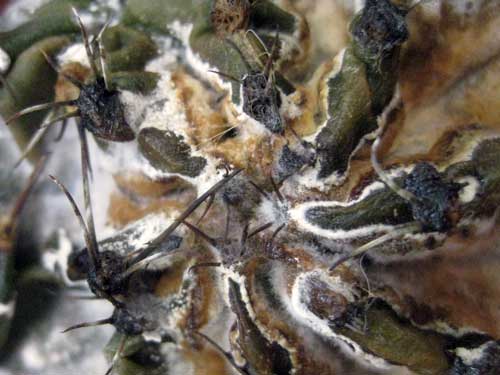
After I get past the death aspect of the plant, I start to see the textures and color combinations.

Death Sad Plant

Can’t help first thinking about textured ceramic glazes.

Glaze Detail

Multiple Glaze-Fired Detail

Glaze Detail

Multiple Fired Glaze-Fired Piece With Egyptian Paste.

Then how can I make a similar surface on wood and metal. I generally do not think about how to use the actual plant in my work.

There is beauty to be found in so many things, even a dying, rotting plant. And I do love sharp and pointy things that act as protection.

Death Sad Plant Detail


I did a bit of research today regarding diseases of cactus and found some information on cactus disease on The Cactus Museum site. Then to my surprise there is a cactus moth.

What is it with moths? Have they always been around and I never paid them much attention? There are moths that pollinate my Brugmansia, so some moths are good for the garden.

The Cactus Museum

Arizona-Sonora Desert Museum

Texas Parks & Wildlife– Cactus Moth Poses New Invasive Species Threat to Texas Biodiversity


Sad Plant

The other day I found one of my plants in a terrible condition.

Sad Plant

I contacted a plant friend for advise and he sent me the following instructions–

Plant Removed From Pot

Unpot the plant, clean all soil off of roots.

Mix a solution of 1 cup of water, add 1/3 cup 70% isopropyl alcohol, add 1 teaspoon of soap (Dr. Bronner’s Peppermint castile soap). Mix well

Immerse plant for 10 minutes, then rinse well with tap water.

Plant Soak

Repot in a clean pot with fresh mix.

Repotted Plant

Wait one week then water with dilute general purpose fertilizer.
Water once a week Spring through fall, Once every two weeks winter


Plant the Day After

Plant the day after.


Plant

Plant on the day that I brought it home in 2009. It was a beautiful plant with lovely flowers.

Flower