What Is It? A Soy Candle???

I bought soy wax flakes when I was attempting to use wax on wool. I didn’t use the wax molten. I added a solvent to it. Then I applied the cold wax to the wool pieces. I wasn’t happy with the results so I thought that it would be fun to use the soy wax to make candles.

After reading several tutorials on making soy candles I thought that I could make easy peasy gifts for the holidays. I was looking forward to binding cinnamon sticks and pine greens to the jars.

I found a great tutorial on Hello Natural.

I followed the instructions. Poured the candles. Everything went well or so I thought. Then an interesting thing happened. The soy wax started to change and grow as it was cooling. Looks a bit like mold growth which I actually like, but not good for a gift.
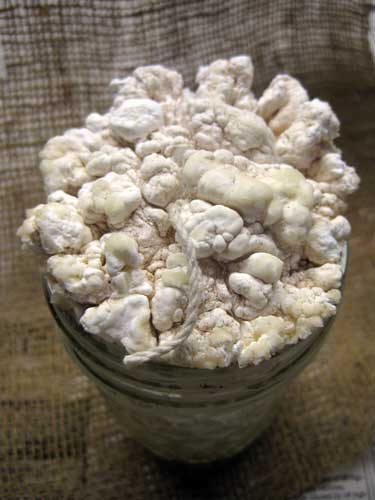
Soy Candle

I googled the results, but couldn’t find an explanation as to why the soy wax changed. Probably it was a temperature issue. Perhaps the wax was too warm when it was poured. I was working in my studio space in the garage. While it was not cold, the jars were definitely much cooler than the wax. But maybe it had something to do with the addition of the spices. Could the oil in the spices that I added have altered the wax?

I broke off a chuck of the wax. The interior was very dry and powdery.
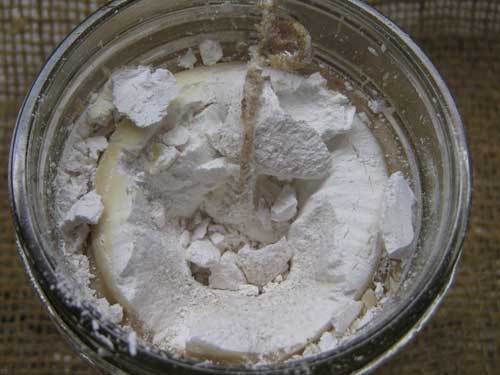
Powdery Soy Candle

I have used a variety of waxes over the years and have never experienced anything peculiar. I used wax for prototypes, as molds for dried plant parts, casting, and molten wax to integrate and age materials.

I don’t look at the result as a failure. It is a problem to be solved. More research is needed. Maybe in the future I will have a need for wax that looks a bit like mold.
A Nice Surprise–A New Addition to My Brugmansia Collection

I have been so busy working on the data base for our software company that I have not had much studio time or time for gardening.

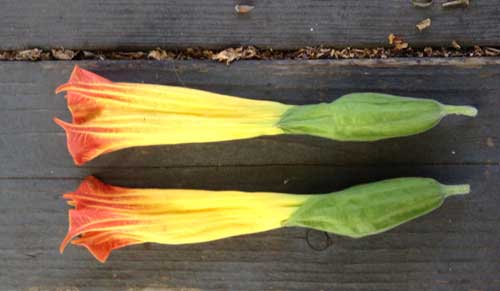
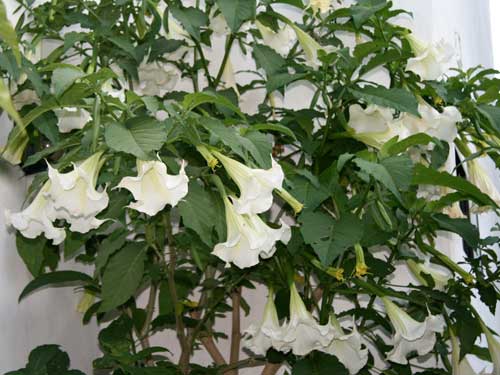
Today we found a surprise in the yard. Our neighbor who is a garden designer, left some large Brugmansia cuttings. My neighbor knows that I collect Brugs. And I am sure knew how excited I would be to have a new addition to my collection.

This is an image of the flowers that were on the cuttings.

New Brug Flowers

Many of my Brugs were grown from seed. When I started my collection it was sometimes difficult to find Brugs. Now it is not uncommon to find potted Brugs at neighborhood garden centers.

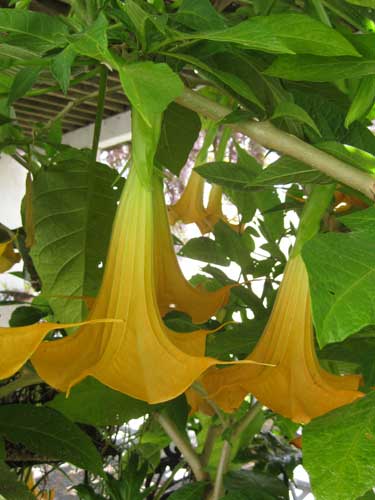
I love Brugs because they have large beautiful flowers that smell delicious in the morning and in the evening.

Brugmansia Image

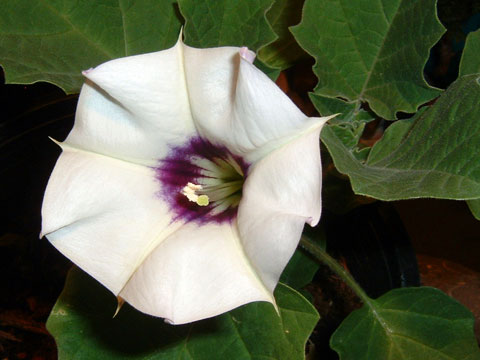
White Brugmansia Image

I also grow Datura. The flowers are lovely and smell equally delicious.

Datura White and Purple Image

Datura Purple Image


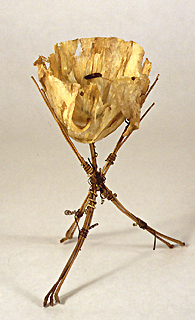
Both Brugs and Datura are poisonous and I use bits in my work. This is one of my poison goblets. All parts are made of poisonous plants. The bowl of the goblet was made by laying dampened flower petals in a wax mold.

Datura Goblet


Rooting Tips

iBrugs

Brugmansia Growers International

My favorite places to purchase Brugmansia and Datura seeds–

Seedman.com

Select Seeds


Material to Identify

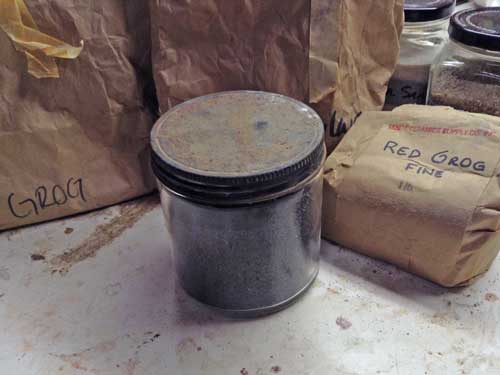
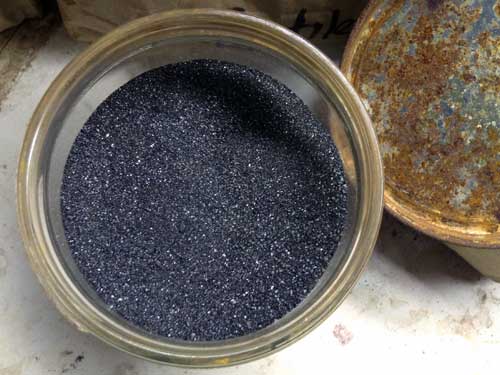
While looking through my clay materials I ran across this jar.

Jar of Material

The jar is not labeled.

Open Jar of Material

So what is it?

In 1996 I was teaching at a community college in California. I arrived one evening to find a hall filled with bags and jars of materials. Apparently someone donated them not knowing that it was necessary to have an MSDS for each. There was all sorts of toxic stuff, lead and the like, and this jar. I brought it home and put it in a box until this weekend.

The material looked vaguely familiar, but couldn’t place it.

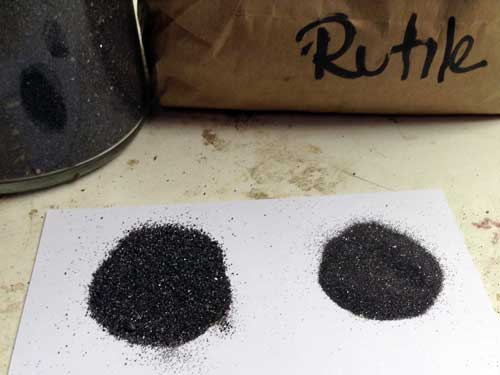
Comparison

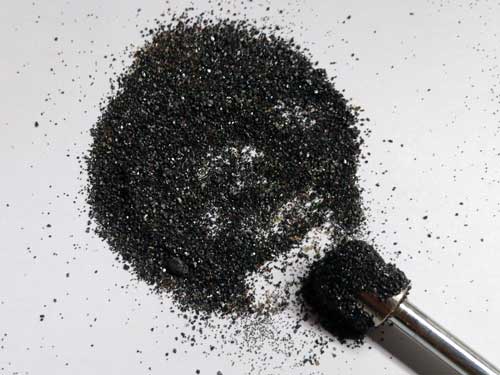
The unidentified material next to granular rutile. The unidentified is on the left, granular rutile is on the right.

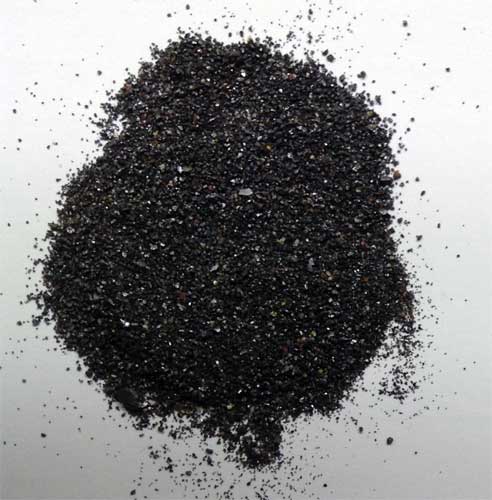
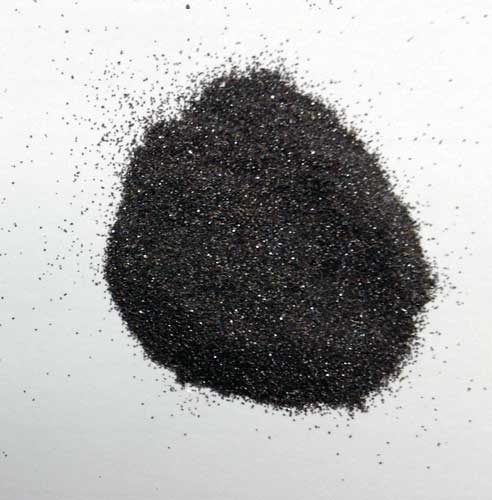
And a closer look at each–

Unknown Material

Granular Rutile

I sent images to an artist friend who worked for a clay company for several years. He suggested it might be Ilmenite. Rather than looking through Conrad, I googled Ilmenite and found this on Wikipedia–

Ilmenite is the titanium-iron oxide mineral with the idealized formula FeTiO3. It is a weakly magnetic black or steel-gray solid. From the commercial perspective, ilmenite is the most important ore of titanium.

Magnetic??? I gave the material a quick test. I grabbed my telescoping magnet. When I placed the magnet near the material this happened–

Magnet

Curious where ilmenite could have been mined and found this information of the

Encyclopedia Britannia site–

Ilmenite… forms large masses, as in Iron Mountain, Wyo., and in the Ilmen Mountains, Russia, from which it derives its name.

The reason I was looking through my clay materials was to find possible materials for use in concrete.

Time to test.


Concrete as an Art Medium

I attempted to use concrete several times over the past 20 years. While some results were promising, I wasn’t ready to commit time to figure out why problems occurred.

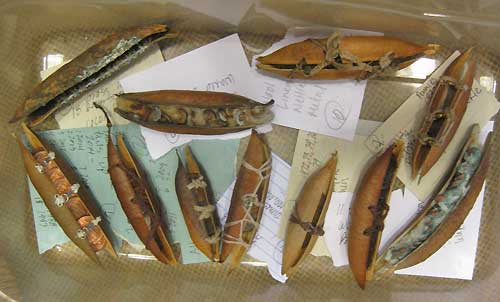
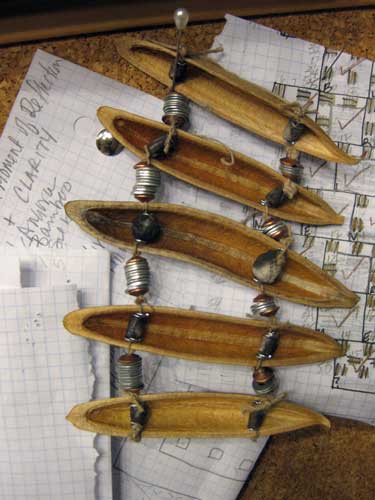
I am currently working on a series of pod pieces. The pieces are constructed of actual woody pods. The contents removed and replaced with coins or metal bits woven into fulled wool, with hinges and bindings added.

Pods in Progress

Yep, they are in a plastic box. Ever since casemaking moths came to live in my studio, everything they might like to eat is stored in plastic or glass.

The plan was to make cedar boxes for the pods. And then a fun thing happened. I was rearranging some things in my studio and found some concrete cups and tiles from my last concrete casting attempt.

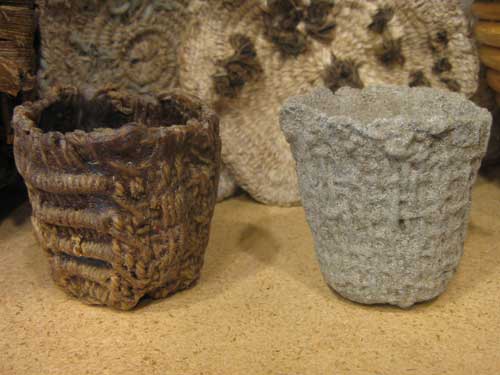
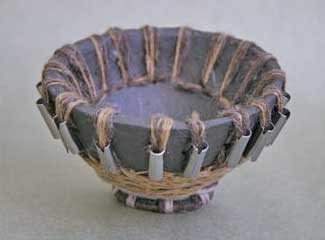
Concrete Cup and Prototype

The concrete cup on the right was cast in a silicone mold.
The mold was made of a waxed woven cup similar to the on the left.

Immediately I started thinking about making concrete boxes for my pods. But how? Concrete box with wood lids? Concrete with bamboo support? Concrete with inlaid copper? Concrete with metal mesh and code?

I googled concrete and found loads of stuff on using ready mixed concrete to make functional objects and tons of stuff on hypertufa.

Then I found Andrew Goss. He has a website with lots of great information for using concrete to make art pieces.

After reading the information on his site, I realized that I had attempted to cast thin walls without compensating for the removal of aggregate. Adding latex wasn’t enough especially when I was not caring properly for the pieces. I did not know the importance of wrapping the pieces in plastic. Why, I don’t know. My background is in clay and I definitely know how to care for clay during forming and drying.

I selected four concrete and hypertufa mixes for my first test–

 Materials Mix 1  Mix 2  Mix 3  Mix 4 
 Concrete 1  1  1  1 
 Vermiculite 4  1.5  1    
 Peat Moss    1.5  1    
 Sand       1  3 

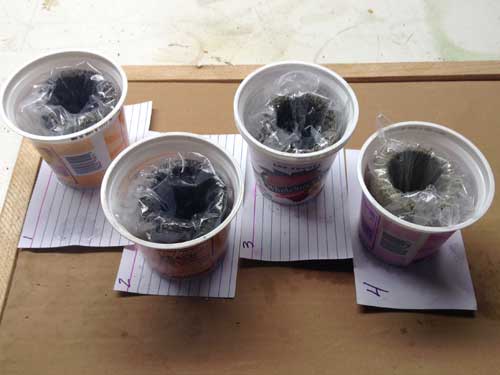
I added very little water so that I could press the concrete into silicone cup molds. I wrapped the concrete-filled molds in plastic. After two days I removed the pieces from the molds, leveled the bottoms of the cups, then wrapped them in plastic. Every day I have given the concrete cups a dip in water, then rewrapped them in plastic, and popped them in yogurt cups. I do think that a thinner plastic would be better.

Wrapped Concrete Cups

The main objective is to find a concrete mix that when cured will live nicely with my pod pieces. I like the texture that results from using peat in a hypertufa mix, but I do not like the bits flitting about in the air when it is sifted. Wearing a respirator does not keep the peat dust from collecting all over the studio. Also, I really dislike the way it smells in the wet mix and every time I unwrap the test pieces.

Since I want to make a success of concrete this time, I thought it would be a good idea to use good and tested information. I purchased Andrew’s book, Concrete Handbook for Artists, Technical Notes for Small-Scale Objects. I wish that I had found the book the first time I attempted concrete.


Andrew Goss’ blog, Art Concrete.

Elder Jones’ blog, Sandpudding Studio. Wet Carved Concrete

John Annesley’s blog, Sustainable Buildings as Art. Burlap-crete

The Hypertufa Gardener

The Cement Tile Blog


Fun Illustration Books

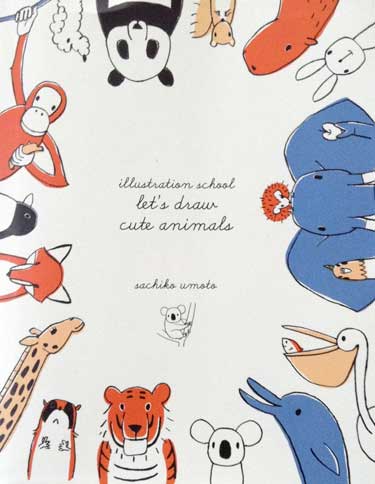
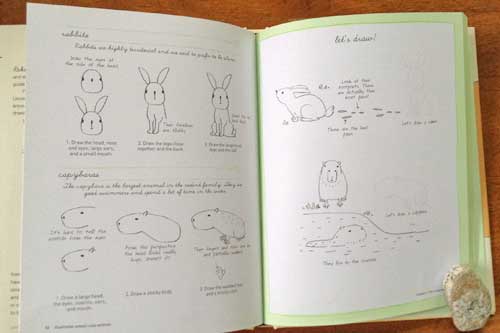
I just found the Illustration School books by Sachiko Umoto. They are very fun. My niece and nephew are enjoying the one I gave to my nephew–

Let’s Draw Cute Animals.

These are some quick snaps of the dust jacket and the page on how to draw a bunny.

Yep, that is a rock form one of trips to the beach.

Illustration School Book

Bunny Pages

There are several books in the series. They would be great for anyone, even adults who would like to learn some simple drawing techniques.


My New Bag

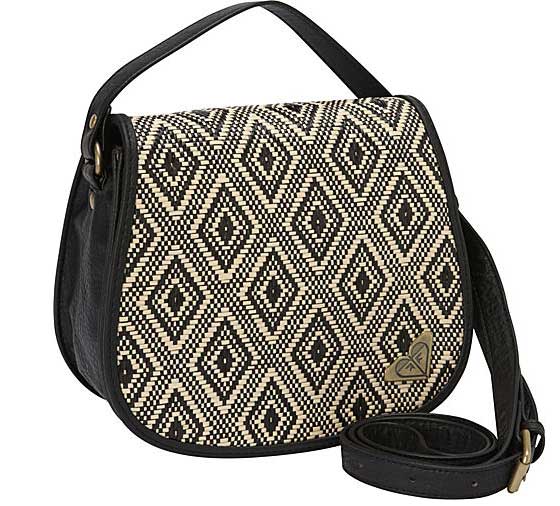
I have been looking for a small everyday bag (that is not leather) for a few years. I found this one yesterday at an Avila Beach shop.

The bag is the perfect size for my wallet, phone, lip balm, notepad, and pencil. I am using my small wallet that I actually bought for my husband at
The Vegan Collection.

The bag can be found on the Roxy site or a bunch of other places like eBags.

My New Bag

I like that it brings to mind the Bargello Needlework.

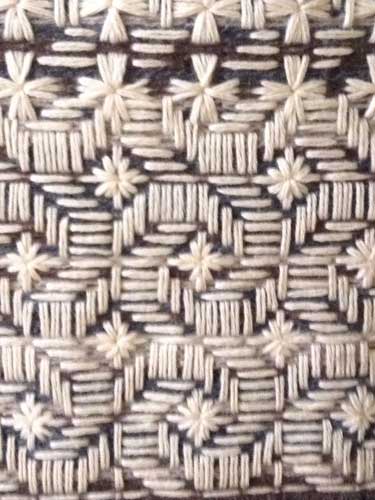
I have been dinking around with some Bargello patterns.

Bargello Detail

I laid in the code layer under the cream Bargello pattern. One color represents the dots, one the dashes, and the third the spaces between letters and words.


Crystals and Lack of Control

I recently read a post on Christine Mauerberger blog regarding growing crystals on leaves. Got me to thinking about several pieces that I made a few years back. One of the pieces was really beautiful, but became annoyingly ugly.

This is the original piece before salting. The piece is composed of fired stoneware, metal, and fiber.

Original Piece


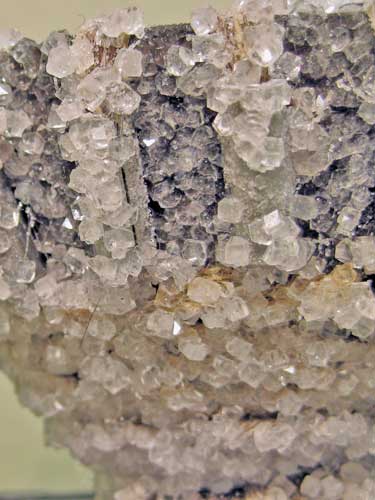
Detail of the piece after being submerged in a solution of hot water and borax.

Crystals


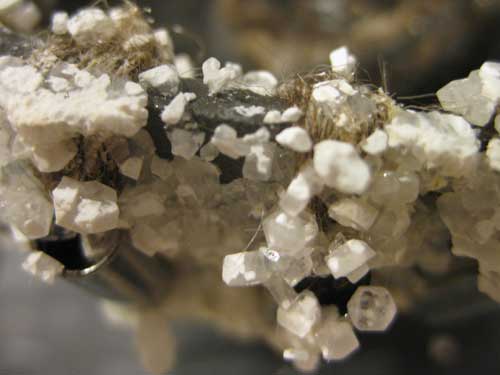
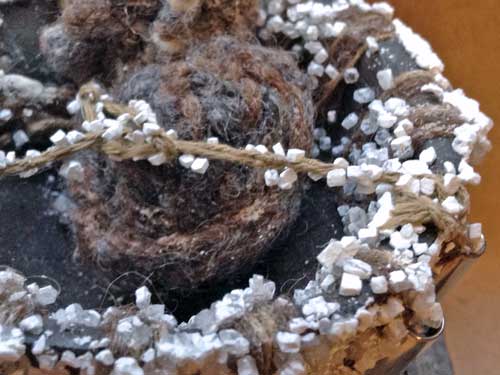
And two details of the crystals on the piece today.

Crystal Changes Detail 1


Crystal Changes Detail 2


Curious why the change so I googled it. Found Andrew Dominic Fortes’ Crystal Growing page. It has some great information.


Change–Bound Pods

Been thinking about binding pods together to make a vessel. Gave it a go yesterday, but didn’t feel connected to the piece.

Bound Pods


When I took the piece apart I started thinking about what pods mean. They are containers. The contents can become new plants. What about the pods? New containers for something else?

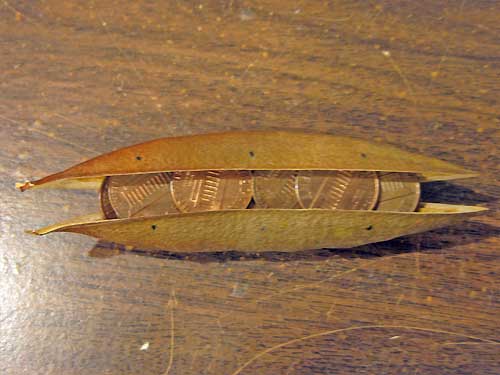
Change Front

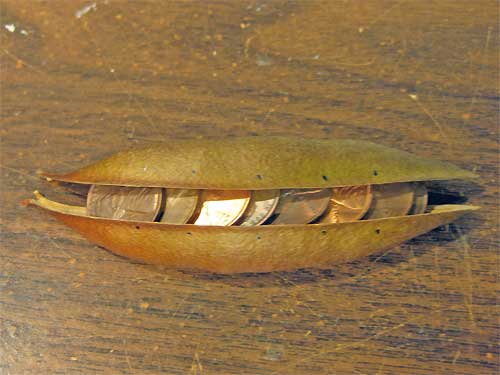
Change Front with 18 Pennies.

Change Front

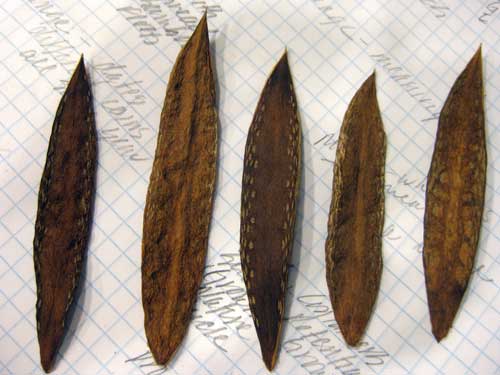
Change Back, Dots to be Drilled. Then to be Bound.


Some Ideas–

Pods, Containers, Protection, Secrete, Hide
Seeds, Source, Potential
Grow, Growth
Nature
Cycle, Pattern, Rhythm
Origin, Propagate

Change
Alter, Replace, Transform, Evolve, Mimic, Echo
Coins, Pennies, Nickels, Dimes

Change Code
Morse and Tap
c -.-. 1,3
h …. 2,3
a .- 1,1
n -. 3,3
g –. 2,2
e . 1,5

And then there are these beautiful bits. The seeds were on either side.

Interior Bits