I am currently staying with my sister’s family in an old farm house in Maryland. When I took my morning walk, I noticed something odd. The fir trees at the edge of the property had what appeared on first glance, some type of pods.
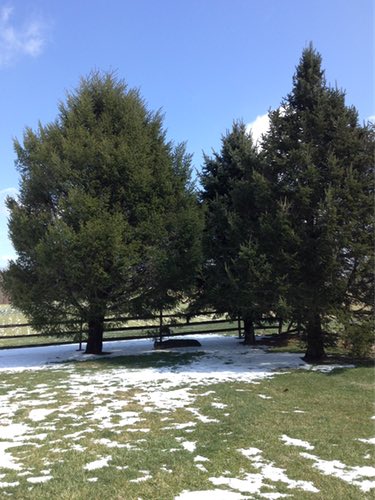
When I took a closer look it became clear that the “pods” were made by insects.
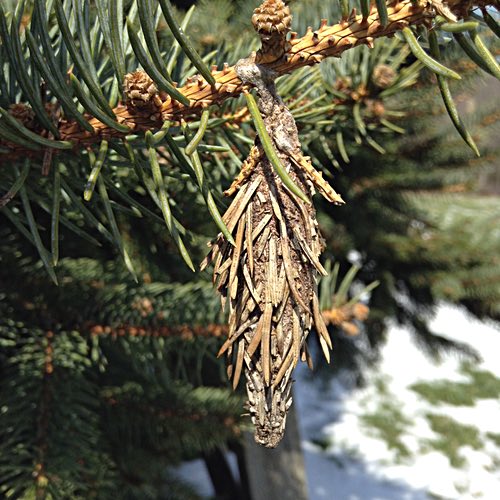
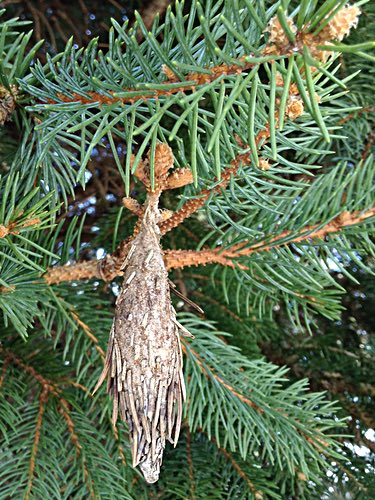
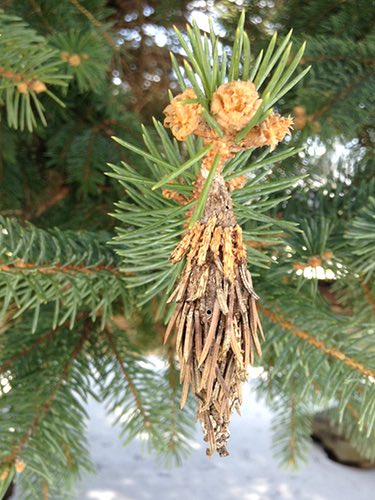
So, who made them?
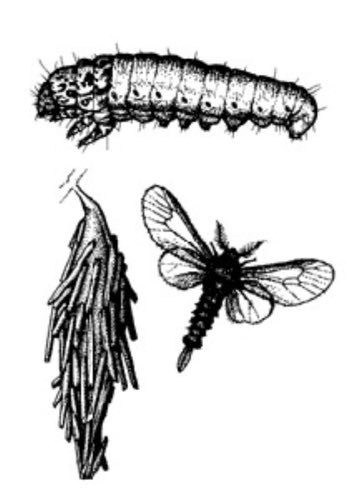
According to the Penn State Dept of Entomology it is the work of the bagworm moth,Thyridopteryx ephemeraeformis (Haworth).
“This insect is most easily recognized by the case or bag that the caterpillar forms and suspends from ornamental plants on which it feeds. The bag is made of silk and bits of host foliage. These materials are interwoven to disguise and add strength to the case.”
It is unfortunate that the bagworm is destructive. The structures that they build are so beautiful. Apparently, it would be a good idea to remove them from the trees to prevent an infestation.
The description of the bag incorporating the surrounding material brings to mind Tinea pellionella, commonly known as casemaking moths.
Casemaking moths are very small. If you are not looking for them or not aware that they even exist. They can be mistaken for a bit of lint.
They are definitely not something I want in my home and studio since I am using natural fiber in my work.
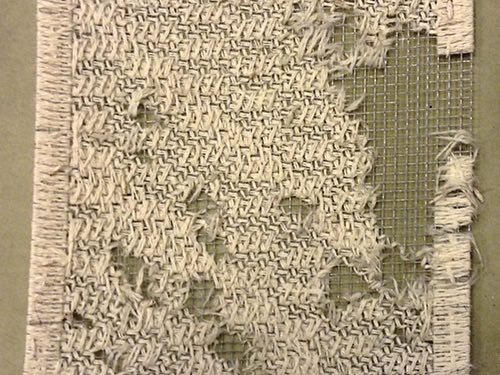
Casemaking moths ate a large portion of the fiber stitchwork of a work in progress.
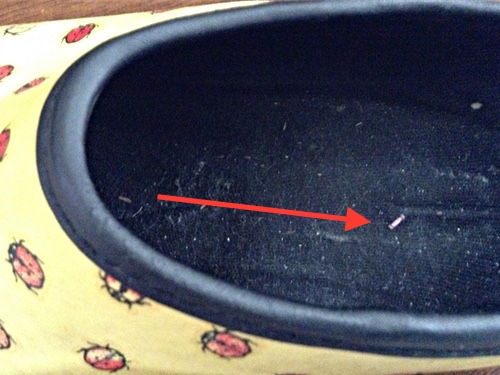
The photo was taken with my iPad. It is difficult to capture something that is so small,
but it is an example of a red case.
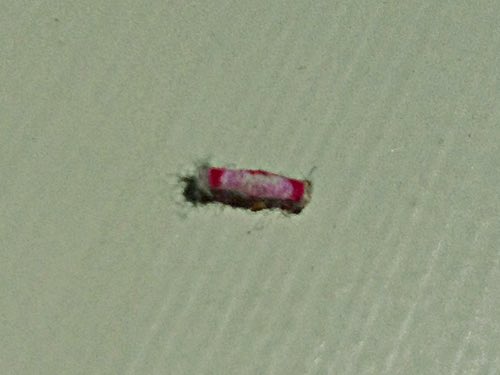
Casemaking moth that was found inside one of my garden clogs.