Happy New Year 2016

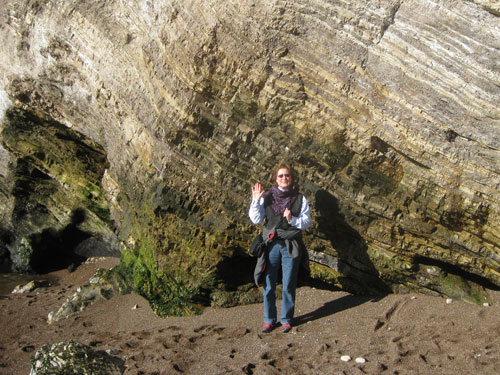
Our tradition continues–January 1st, visit the beach.

2016 Happy New Year

Early this morning it was 35º. When you live on the California Central Coast it is common to dress in layers. Today I added a couple of additional layers thinking it would be cold. It wasn’t. It was a warm and gorgeous day.

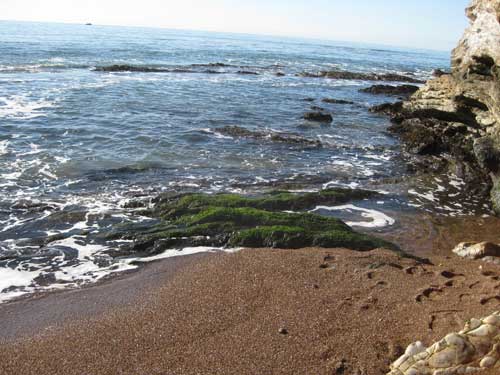
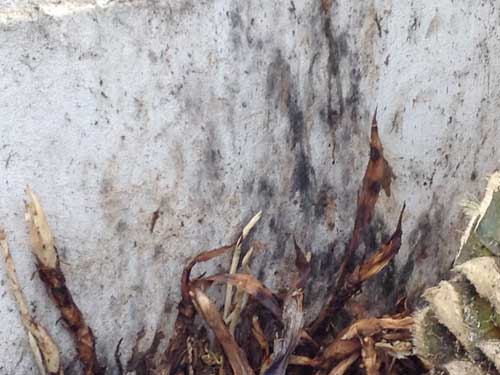
Today low tide was at 10:00-ish, but not exactly low tide. It was about 2 feet. The dark curved area in the upper portion of the photo is actually a great area for exploring tide pools. Today totally covered with water.

Low tide

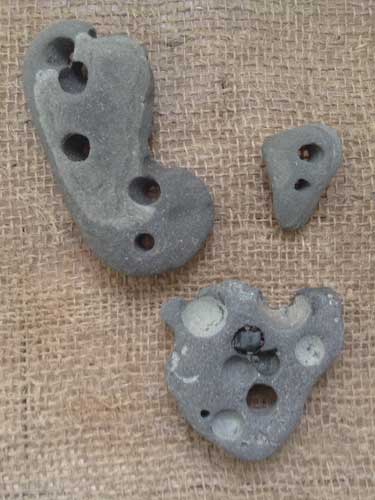
And part of the New Year tradition is to search for holey rocks. I do not believe that they are a source of good luck, but nature-made holes are very cool. In the past I have used rocks with holes in my work.

Holey Rocks


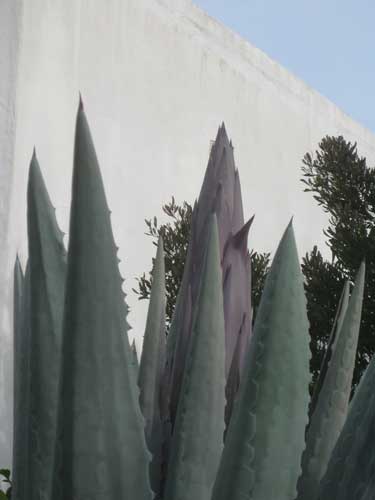
Agave and Hawks

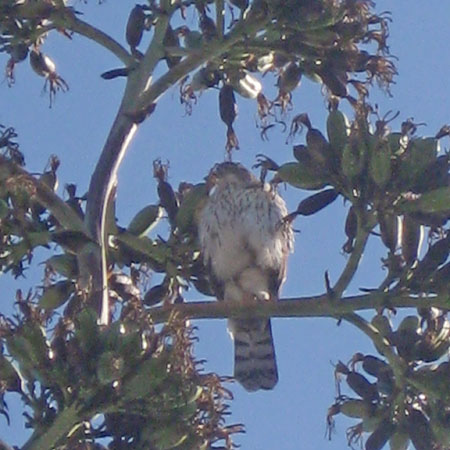
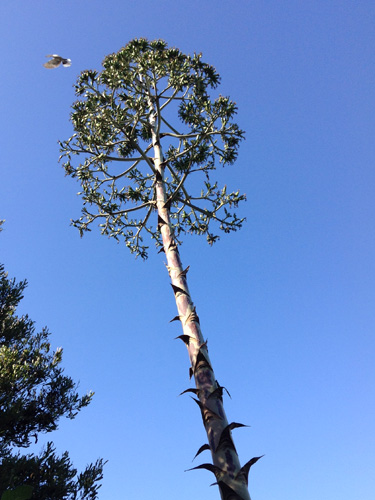
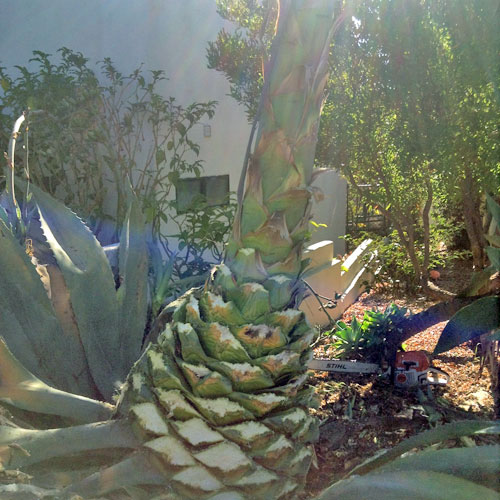
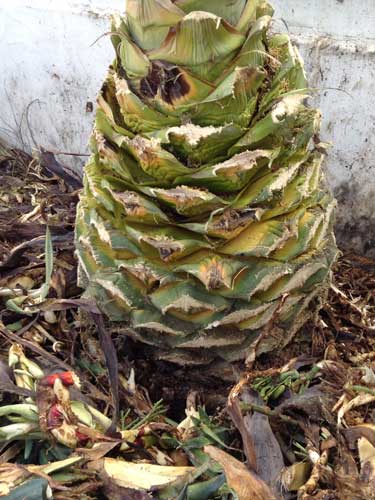
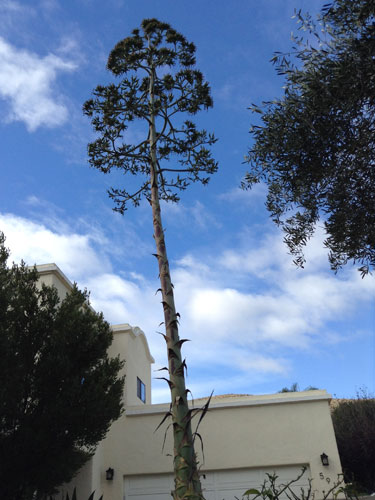
Recently we have been seeing hawks in our neighborhood. The past week there was one perched in the top of the agave. Yes, the agave still stands. I watched the hawk for several minutes. It was grooming itself until a pair of doves attempted to land on the agave. Suddenly, it stretched out its wings and took flight after the startled doves.

Hawk in the Agave

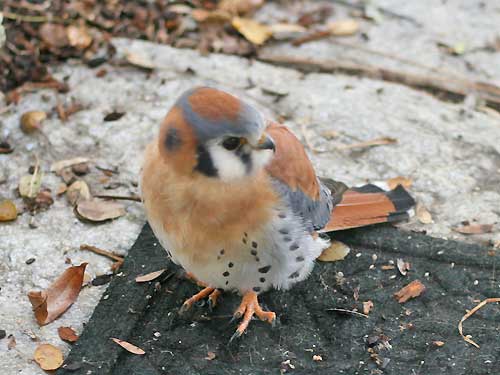
Yesterday there was a thump on the kitchen door. We found this little hawk.

Hawk in Courtyard

We have a bird feeder in the courtyard that attracts finches, sparrows, blue jays, and doves. Perhaps the hawk came for breakfast. After several minutes the hawk flew away.


Slat Book and the Bead Loom

Last night I was looking through some work in progress and saw a bead loom. It was a gift that I never used, but thought it might come in handy for something, some day.
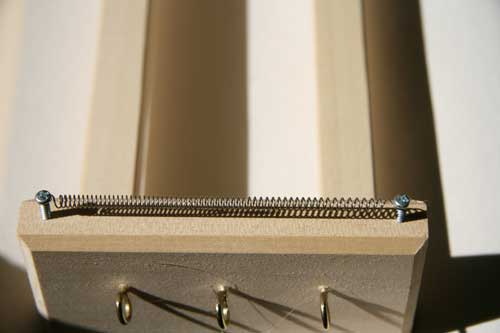
Bead Loom

A bead loom is basically springs attached to a wood frame. In my limited use of springs, it makes sense that a larger spring would work when weaving thicker fiber.

Something that did occur to me when removing the piece from the loom, it would be a good idea to place a rod next to the spring and wrap the fiber around the rod before placing in the spring.
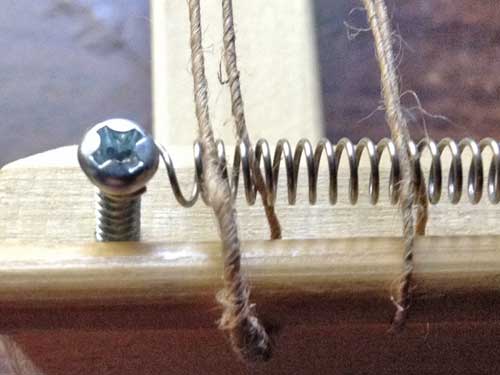
Bead Loom With Rod

After quickly trying my idea, I found that there was a need for clamps to the hold the rod in place.

Back to the weaving experiment: I strung the bead loom with some nettle and started weaving. I used cream wool, nettle, and Tecoma pods.
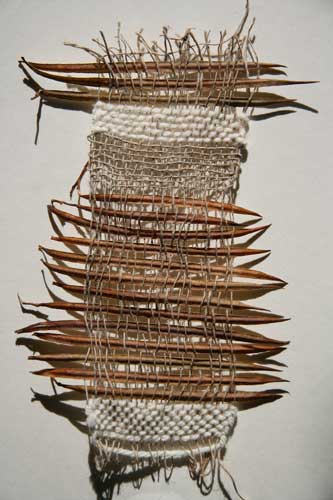
Bead Loom Result

The result is exciting because it might be the solution to my slat book problem. I plan to use Pandorea jasminoides parts, stitched with a letter in code.
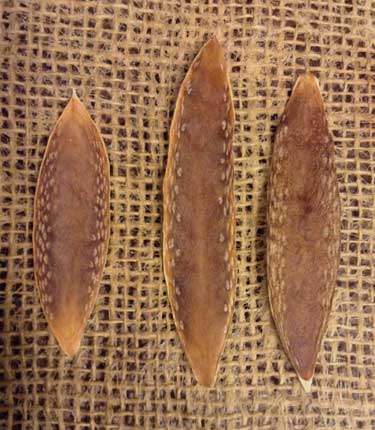
Plant Bits

Slat books typically use regular shaped pieces for each of the slats. The Pandorea jasminoides parts are a variety of widths and lengths. I really like them because they bring to mind shields.

If I were to use a similar weaving process, I think it just might work. I plan to try using three strand of nettle on each side leaving the central section of the Pandorea jasminoides parts open for easy reading of the code. Well, maybe not actually easy reading. It will be code.

Slat Book with information about the plant materials and code posted on September 17th, 2015

Slat Book with information about glycerin and code posted on October 11th, 2015


Serendipitous events can result in great ideas.
Or, discovery makes making art so much fun.

Potential New Art Material–Tecoma stans

I have been watching this plant for a few months.

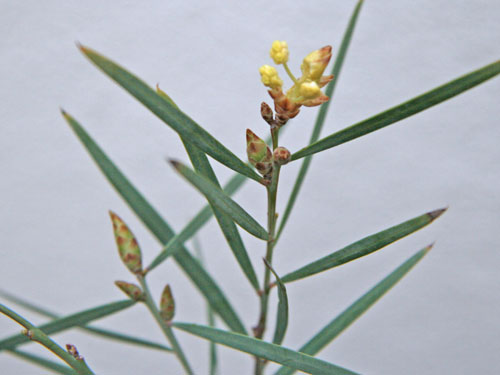
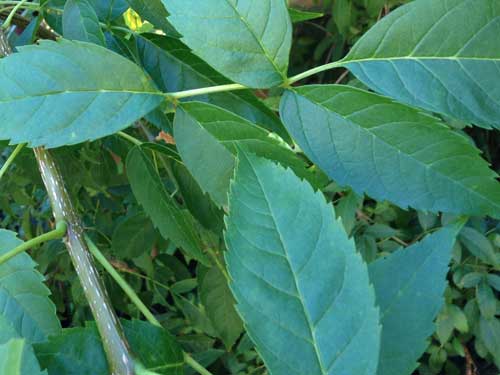
Tecoma Leaves

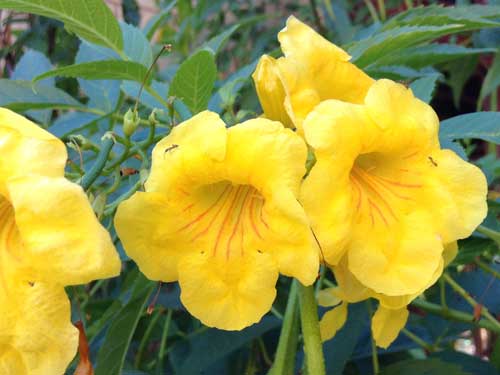
Tecoma Flowers

When I first saw it there were thin bean-like green pods. I thought that they would be a possible art material. Curious about the pods. How would they change with age?

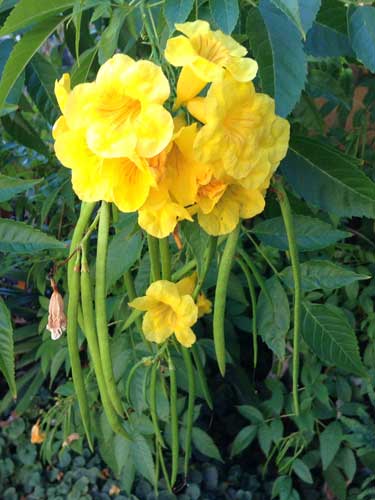
Tecoma Flowers and Pods

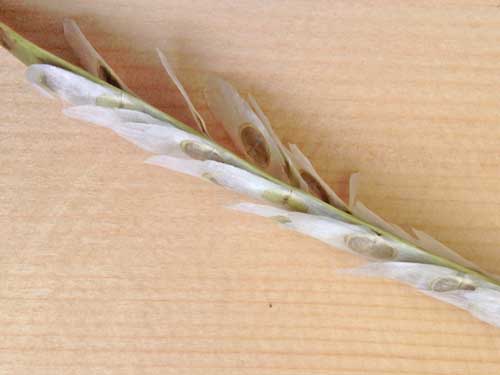
Tecoma Seeds

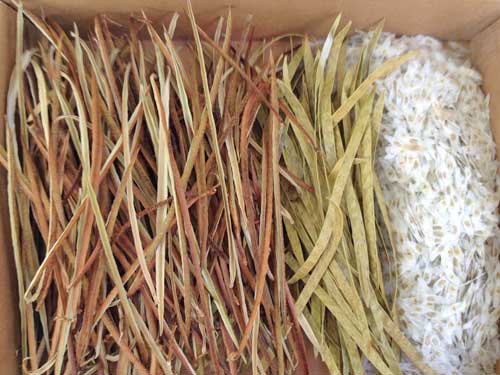
Tecoma Parts

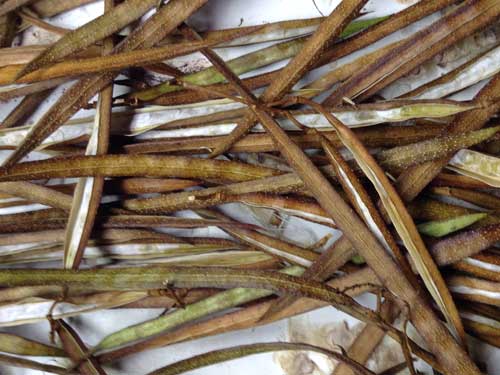
The reddish-brown speckled pods bring to mind young birch branches.

Tecoma Pods

Hope to weave them with wool and cotton fiber. Unfortunately, they are quite fragile. In the past I would have used hot wax to make them more usable, to give them strength to withstand the stitching and weaving processes. Thinking about giving them a soak in glycerin.


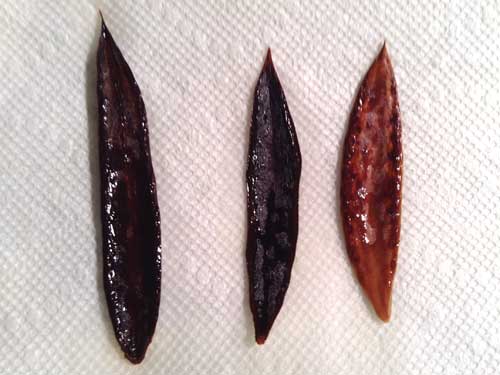
Glycerin Test Results

I removed the plant parts from the water and glycerin solution after 4 hours.

Test Water Glycerin

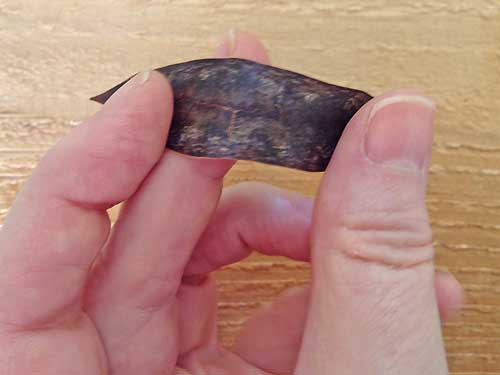
The next morning after they dried, I noticed they were definitely more pliable.

Test Water Glycerin Bend

Not easy taking a photo with an iPad of your own hand while holding something.

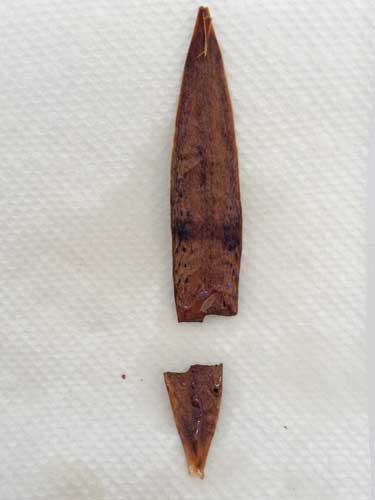
I removed a test from the denatured alcohol and glycerin solution after 16 hours. It was inflexible and snapped.

Test Alcohol Glycerin

I suspect the alcohol solution would be better for preserving the plant parts, rather than for my purposes. The jar does not take up much space so I will check them daily for improvement.


Sticks and Stones

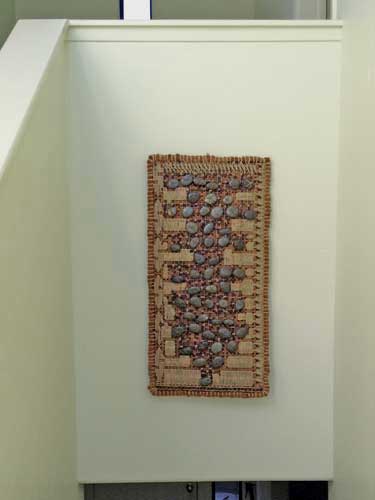
Yesterday I hung Sticks and Stones, but immediately realized two things: the piece is far too small for the space, and the lower right corner tends to bow out a bit.

Sticks and Stones

It is nice having something in that space. Need to start planning a larger piece.

How to fix the bow?

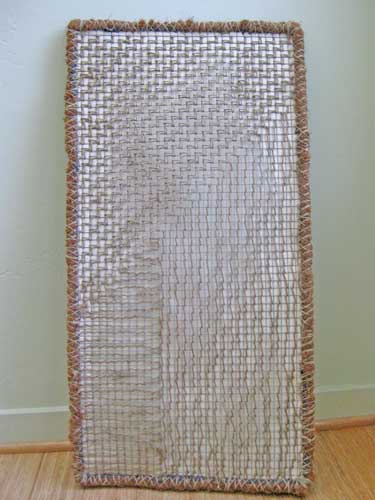
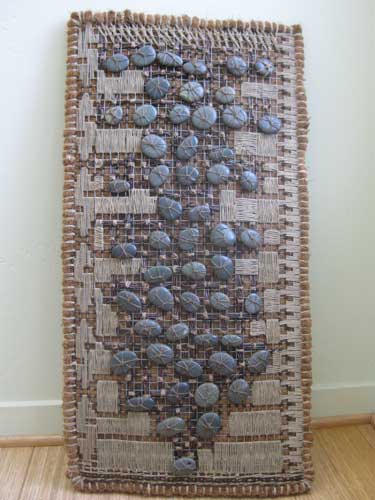
The piece is constructed of two pieces of hardware cloth bound together.

Sticks and Stones Back

Sticks and Stones Front

Bending should be an easy fix for the bowed out corner, but when I gave it a go, it did not change how it hung.

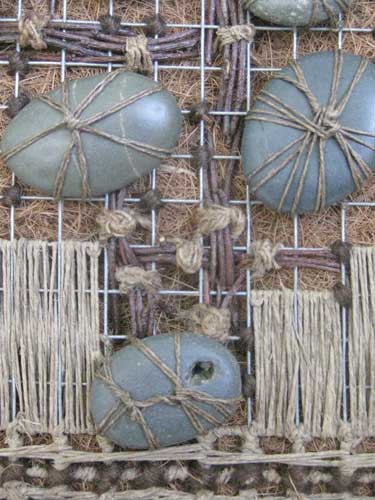
It really should be bent a bit toward the center, but I do not want to risk breaking the sticks that make up the code.

Sticks and Stones Code Detail

The plan is to let it hang until I figure out the bow problem.


Slat Book Progress…

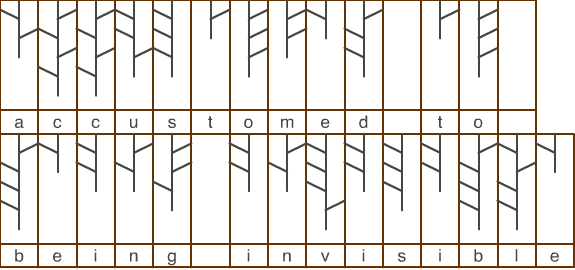
I have been planning to make a slat book using the middle bit (ovary) from Pandorea jasminoides seed pods. I planned the code, “accustomed to being invisible” that will be stitched onto the plant bits.

Invisible Code

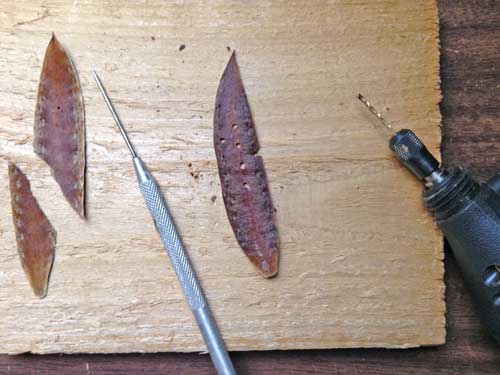
Holes in Pandorea jasminoides

I used a needle tool to make holes in one piece. The piece fractured in half.
I then used a Dremel to drill holes. When I started stitching, with nettle, part of the edge broke away.


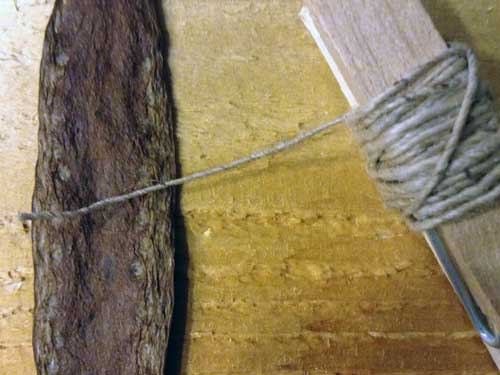
This is what the nettle twine looks like with the Pandorea jasminoides bits.
Nettle


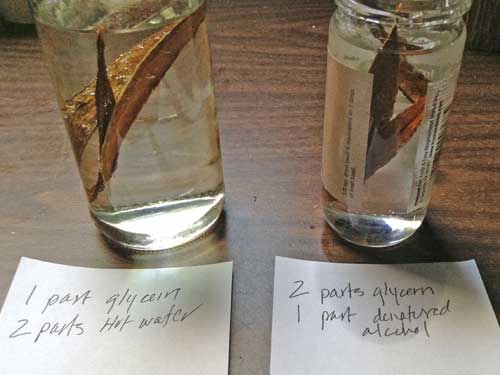
I decided to give glycerin a go to soften the pieces and to make them able to take the stitching. I am trying to solutions–one with hot water and one with denatured alcohol.

Tadpole

The jar on the left is a solution of 1 part gylcerin and 2 parts hot water.
The jar on the right is a solution of 2 parts glycerin and 1 part denatured alcohol.

It is interesting that many processes do require waiting. Sometimes a process can be sped up, most of the time patience is required.