Work in Progress–Accustomed to Being Invisible

Have you ever been standing in a shop looking at what is on the shelf a few feet away, suddenly someone walks in front of you, and in between you and the shelf? You step back, out of their way, because you were not seen. Have you ever walked up to an automatic door and found yourself standing there waiting for the door to open? Your presence was not recognized by a sensor. How many times have you touched your iPad screen to open an app and nothing happened? Could you be invisible?

Got to thinking about, well being invisible. And since most of the time I don’t really care if I am noticed, I started thinking about things of substance in nature that are hidden or invisible. Things that have an important function, but remain hidden to the casual viewer.

I am in the process of using plant parts that are typically hidden in my invisible series. The parts are beautiful, often with patterns imprinted on them as the result of their function in the life-cycle of the plants.
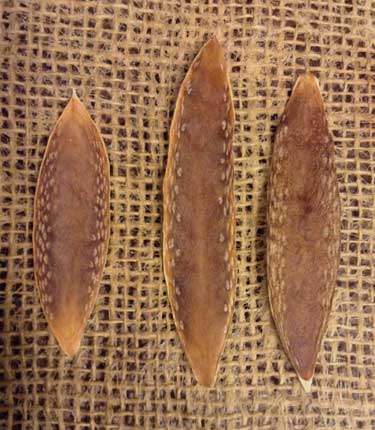
Interior Bits

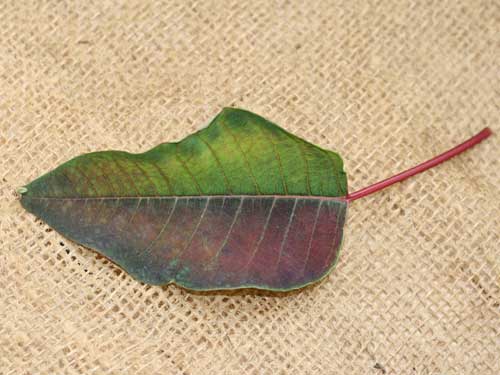
These are the interior bits of Pandorea jasminoides. I collected some pods that I thought would be fun to use. When I opened the pods and removed the seeds, I found these beautiful shields.

I recently purchased a Pandorea jasminoides, specifically to harvest the pods, seeds, and other interior bits. This is the first harvested pod.
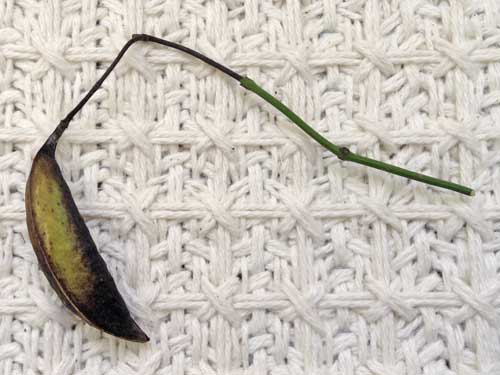
Pandorea jasminoides pod

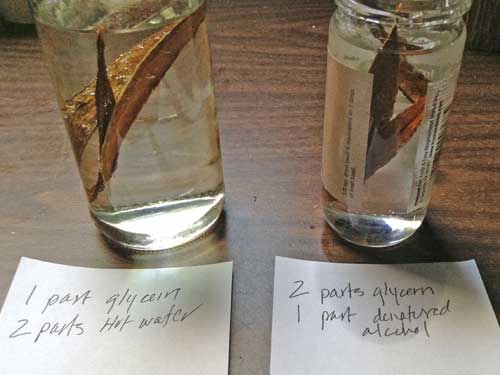
Glycerin Mixture

The Pandorea jasminoides bits were soaked in a glycerin solution to make them more pliable and easier to stitch.
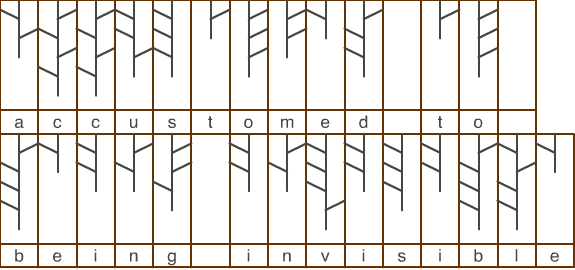
Invisible Code

Code to be used on Pandorea jasminoides bits.
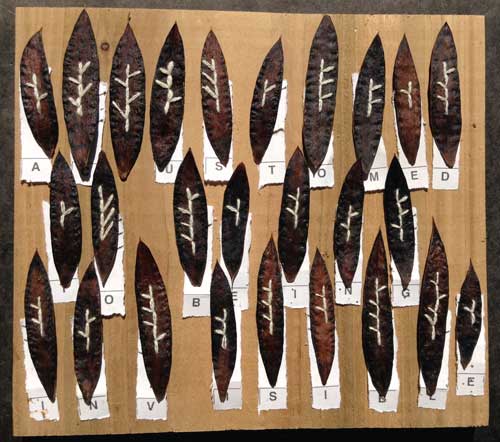
Invisible Stitched

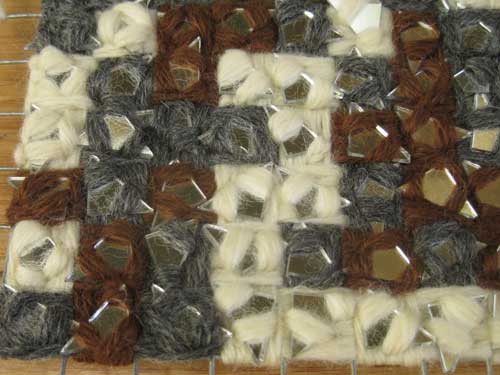
The Pandorea jasminoides bits were stitched with Alpaca Lace yarn. Each piece was stitched with a letter of the quote–accustomed to being invisible.

The current plan is to make a page with the coded pieces on one side and a bound small round mirror of the other side. I seriously thought about making knitted and fulled pages, but I am not pleased with the results, yet.

Decided to try using some embroidered pieces for the pages.
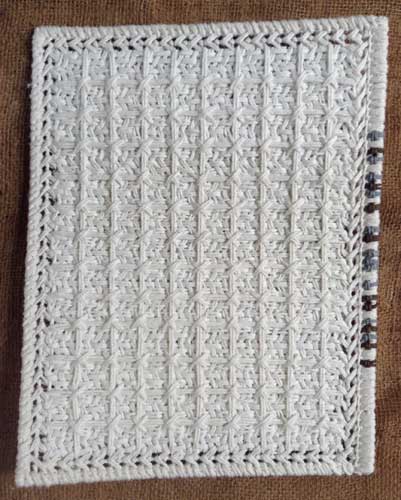
Front Page

The right side has–take notice in code. Not sure that I like it.
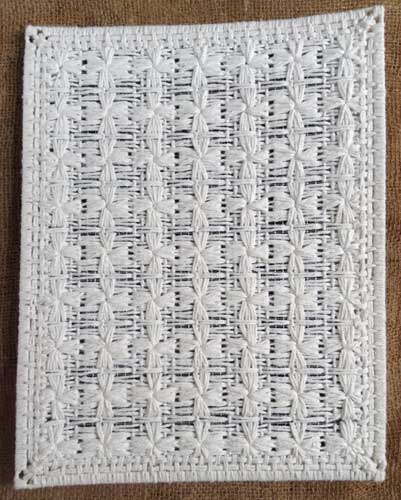
Back Page

Each embroidered piece is 45 squares (11.25″) wide and 58 squares (14.5″) high. The openness of the stitches is one of the reasons for using the roofing felt in between. I love roofing felt–the way it feels, smells, and looks. I started using roofing felt when I was investment casting. Some of the roofing felt that had been used in the casting process had lovely plaster stains. I liked the used roofing felt so much I used it in my Headbox series.
Blooms and Fragrance in My Gardens

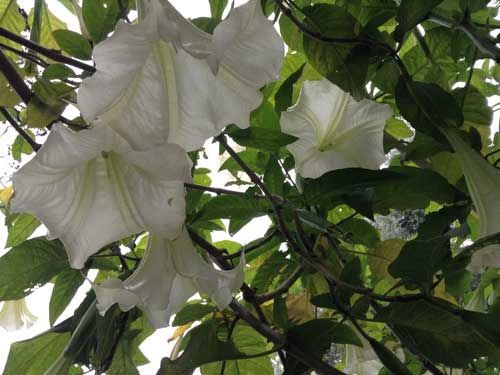
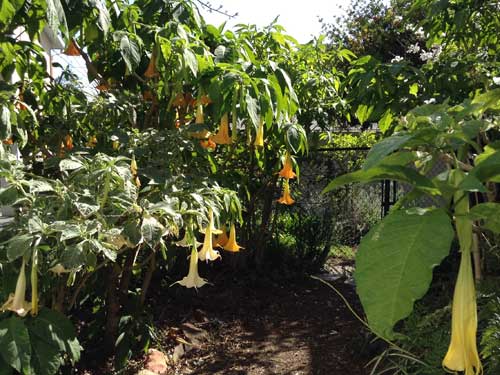
Brugmansia

Blooming and Fragrant Brugmansia.

Original plant was grown from seed that I purchased from seedman.com .This plant is a cutting from the original plant. The plant needs to be pruned often because it tends to want to grow 15 feet or taller.

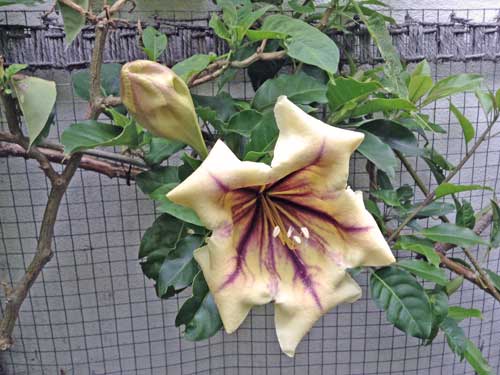
Solandra maxima

This is my first Solandra Maxima. It has large gorgeous flowers that smell delicious.

I have taken numerous cuttings from the plant. There are Solandra maxima growing in several locations in my gardens.

Brugmansia

Brugs in the Garden

I removed several Brugs because of water rationing. These look slightly wilted, but the majority of the time, limited watering does not seem to be a bother. A large part of the day they are in filtered light.

Bird feeder Growing

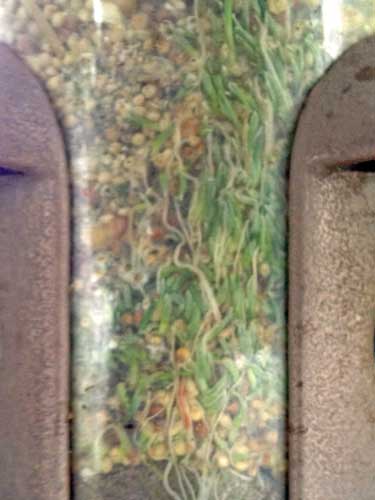
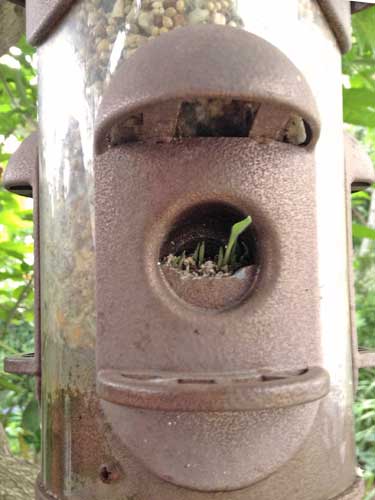
For whatever reason this bird feeder is not attracting birds. After the rain I found sprouted seeds.

Bird feeder Sprouting

The bird feed has been taken down and cleaned.


Books and the Book Series

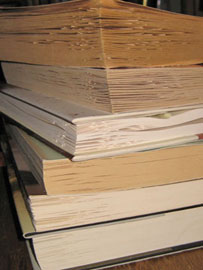
Books have always been a part of my life. When we were children, my mother would take us to the library. When I was in college I would spend part of a day each week wandering through the stacks. After grad school, I started my library. I have nearly 1,500 books. There are books on art, artists, film, graphic design, gardening, horticulture, novels, children’s books, textbooks, and miscellaneous books on random topics.

I love reading, the way books feel in my hands, turning the pages, the fragrance of paper and ink. I was taught to respect books, but then something happened. I found that I really liked underlining. That grew to writing in the margins and using any white space to record ideas for possible work. Then I started folding corners and pages.

Books

When I open one of my books to locate a quote or some notes that I have made, it is quite enjoyable to revisit the story, to read a few pages or several chapters. To remember the first time that I read the book.


I resisted reading e-books. My iPad is thin, slippery, and has a bit of glare. How would I dog-ear pages, write in the margins, underline…

I tried reading a few books on my iPad and in doing so found that I could customize the text. I could make the text large enough that I no longer needed to wear glasses. I also found that I quite like reading light text on a black background. And I could read in the dark.

Then I found how easy it was to highlight, bookmark, and make notes. I could download the lot from amazon. A few adjustments to the downloaded file and I could import the text into my database of quotes and phrases. Yep, I have a database of words, phrases, quotes.


I have thought about making books, but one thing always stopped me. What will be on the pages? The thought of an empty book, seemed incomplete. I actually attempted constructing a few books over the years.

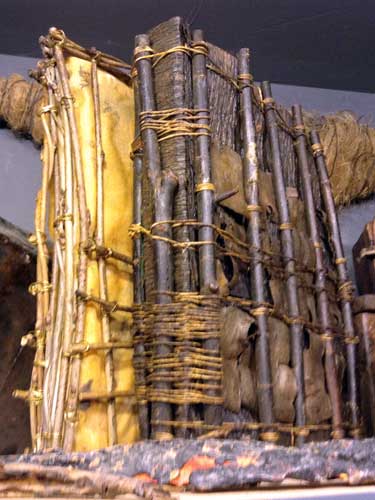
Twig Books

A couple of books constructed of materials collected from nature, fabric, paper, copper wire, and waxed linen cord. I saved a couple to remind myself why they did not work.

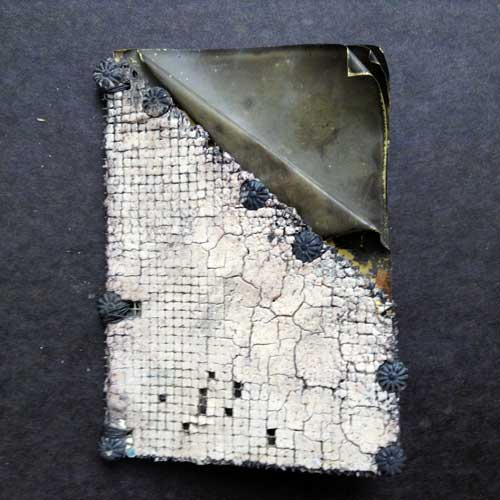
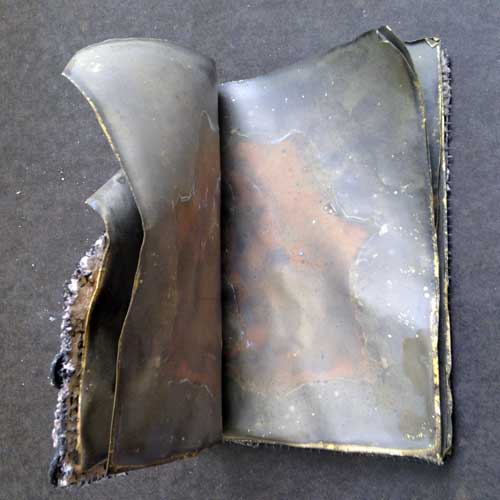
I also made a series of small books constructed of hardware cloth covers coated with Egyptian Paste. The covers were fired to cone 016. Hot enough for the clay to mature, but not hot enough to melt the hardware cloth. I cut copper and aluminum flashing for the pages. I bound the pages and covers together and fired the lot.

Egyptian Paste Book

Egyptian Paste Book Open

The pages have a lovely surface, but they are still empty.


The past several years I have used coded messages in my work. It is quite enjoyable to figure out ways to put text in my work that cannot actually be read as text but is seen as pattern. Well, the text could be read if the code is deciphered. And since I am not a cryptographer, it isn’t too difficult to figure out.

Dont Detail

This is a detail of code in a work that I have since completed. I used Morse code with rust yarn for the dots, gray yarn for the dashes, and cream yarn for the spacers. The bottom left corner has gray, rust, gray which is dash-dot-dash or a k.


I have decided to revisit books again with the idea of including coded text. Each book will have a theme: connection, grief/loss, invisible/visible, kindness, memory, nature, perception/seeing, power, reflection, self, truth…

My plan was to make wool knitted and fulled pages, with stitched coded messages, and dried and stitched plant bits. I knitted all sorts of stitch patterns to see which stitches would work best.

Then something unexpected happened. I had a dream, an epiphany. In the dream rather than making books I was making pages and framing them as artifact. Framed fragments of pages would be more compatible with my body of work. Was my creative self giving me a message or was the dream a mash up of a bunch of things that I had been thinking about throughout the day? No matter, I like the idea.

I began to approach knitting differently. Rather than knitting rectangles for book pages, I wanted the pieces to be odd shaped.

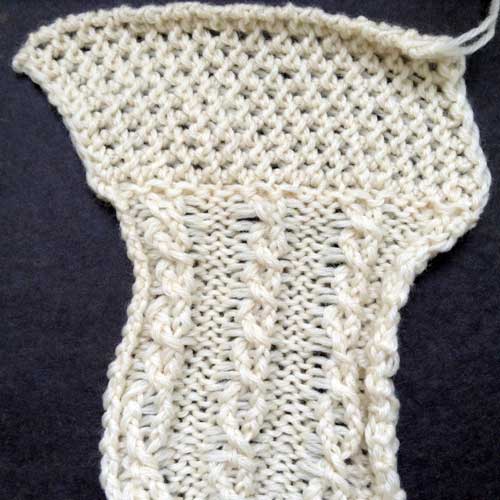
E wrap Purl Cable

The top portion was knitted. The piece was removed from the loom, rotated 45º, returned to the loom, and then the cable pattern was knitted.

Top Portion
Row 1 E-wrap (each peg twice)
Row 2 Purl (wrap)

Bottom Portion (Cable)
Row 1 Knit
Row 2 Purl
Row 3 Knit
Row 4 P,P, Twist Knit, P,P, Twist Knit…

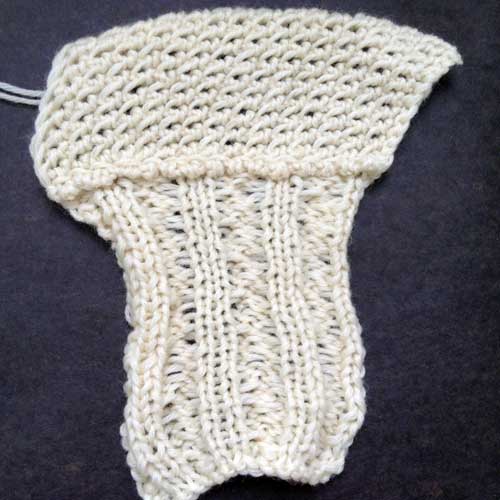
This is the back of the above piece. It is important that the back is interesting because both sides of a page can be visible.

E wrap Purl Cable


This combination of stitches is quite nice. There does seem to be some consistency in my choices. It appears that I like knot-like stitches.

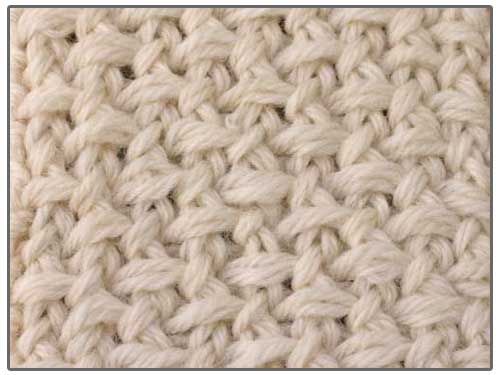
Figure 8 with E-wrap

Row 1 Figure 8
Row 2 E-wrap

If after fulling, the fabric still has holes, I plan to either weave in yarn or an i-cord.


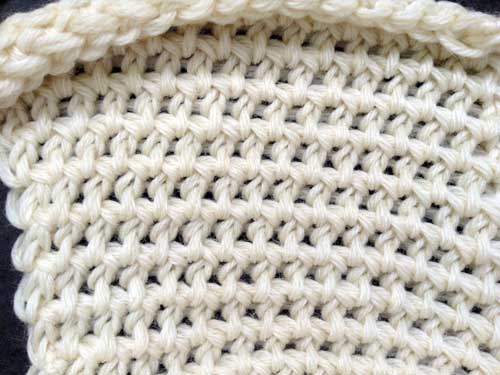
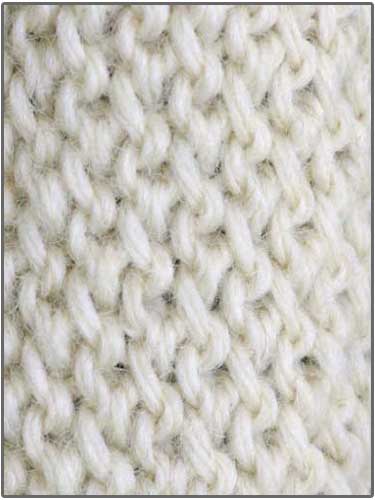
Linen Stitch

The idea was to knit a long piece, full it, and fold it in half to create a signature. Then bind several signatures together.
Row 1 K all
Row 2 K, S… K
Row 3 K all
Row 4 S, K… S

It will be fun to see how the series evolves.


Agave Watch 1 February 2016

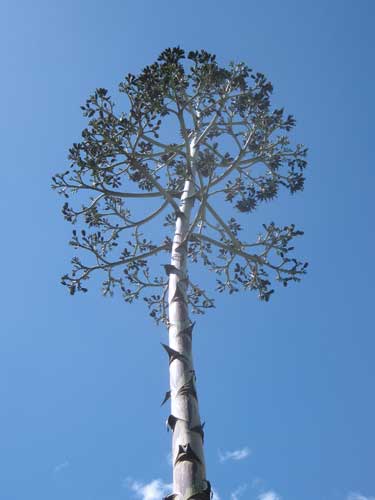
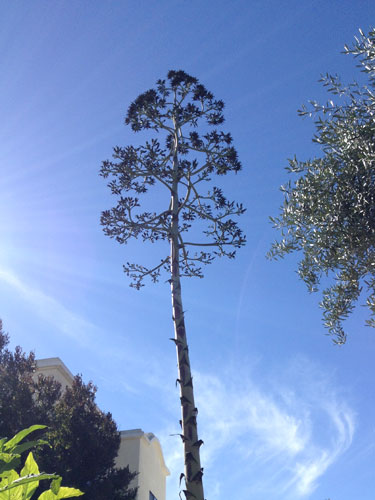
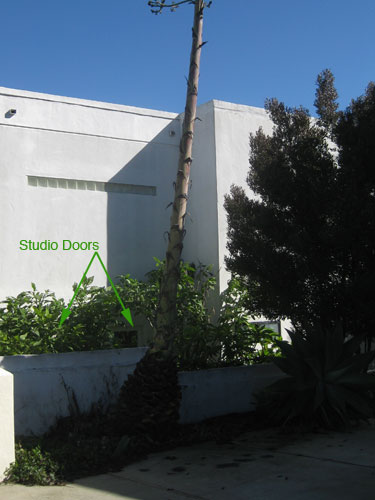
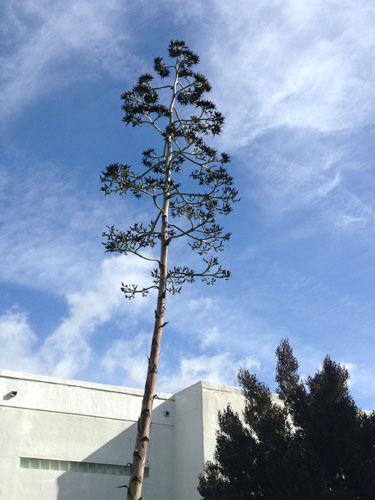
I was pleasantly surprised to see that the agave next door is still standing.

There was rain. And there was what seemed to be strong wind through the night. But it still stands.

Agave

I visited sloweather.com to find out what the agave survived.

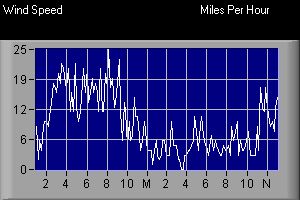
Wind Speed Graph

The wind speed was a tad less than 25 mph.

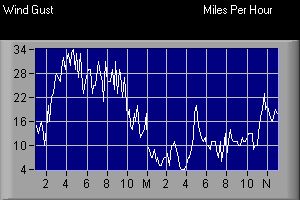
Wind Gust Graph

The highest wind gusts were approximately 34 mph.

A tad windy, but not enough to topple the agave.

Over the past few months the agave has developed quite the tilt. It is difficult to actually see the tilt from my studio because the Brugmansia have leafed out, started to bloom, and are obscuring my view.

Agave from the Studio Window

This is the first image that I shot. It is dated 24 March 2015.

First Agave Image

Will the agave still be standing 24 March 2016?


Loom Knitting Pages for a Book

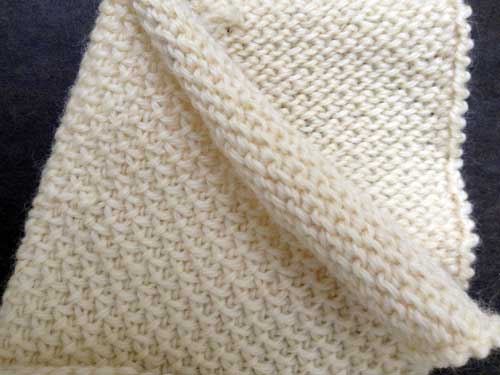
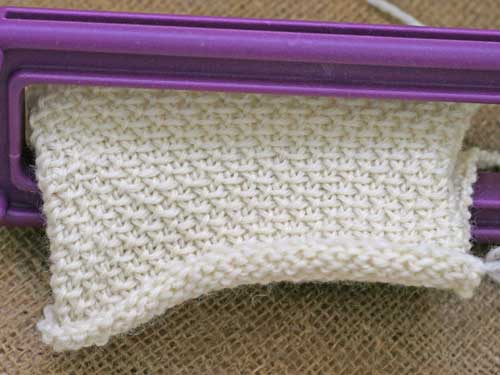
I am attempting to knit pages for a book on a sock loom. The yarn is Lion Brand Fishermen’s Wool. The color is natural.

Knitting on Sock Loom

Row 1 U wrap knit
Row 2 U wrap knit, Slip;… U wrap knit
Row 3 U wrap knit
Row 4 2 U wrap knit, Slip; end with Slip, and 2 U wrap knit stitches

Slip Stitch–start a purl stitch and slip the new loop over the peg, rather than pulling the existing loop off of the peg and replacing with the new loop.

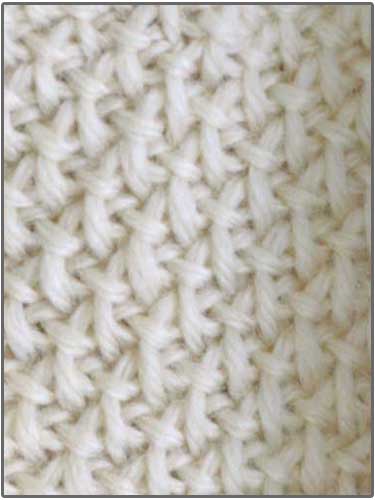
Sock Loom Knit Front

Sock Loom Knit Front

Sock Loom Knit Back

Sock Loom Knit Back

A similar stitch pattern on a larger loom with two strands of LB Fishermen’s wool. I didn’t want to felt the piece because I wanted a bit of the stitch to show.

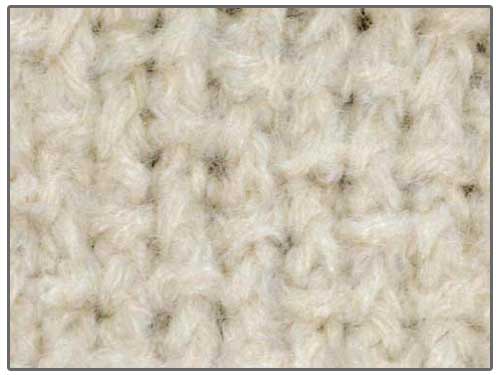
Chinese Waves Stitch

Row 1 Knit
Row 2 K, Slip…, K
Row 3 K
Row 4 K, K, Slip… S, K, K

U wrap Knit
Slip–remove loop from loom, lay working yarn on peg (to the inside of the loom), replace loop.

When fulled, the piece was too thick.

Chinese Waves Stitch Fulled


Loom Knitting Help

Knitting on the Net

Great Tuteate YouTube Loom Knitting Videos