Thursday, August 10
Friday, August 11 Early Morning
Thursday, August 10
Friday, August 11 Early Morning
Last week I noticed that my milkweed wasn’t looking quite right. The lower leaves were turning yellow and dropping. And most of the flowers had gone missing. The heat of the past days?
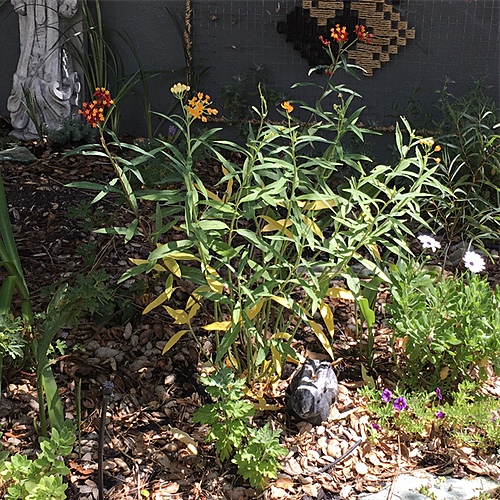
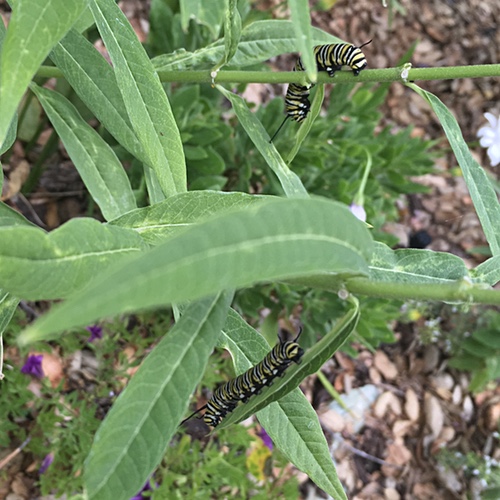
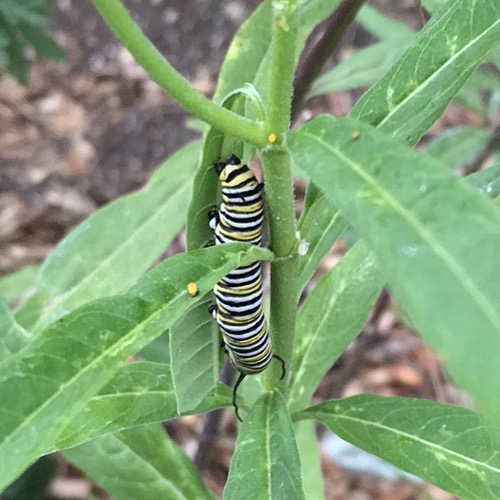
I took a quick look and one of the problems seemed to be aphids. When I was nearly finished spraying the aphids, I saw a caterpillar. Concerned that I might have accidentally sprayed the caterpillar, I gave the it a bit of a shower. Shortly after its shower, the caterpillar began to move quickly down the stem. And then it seemed to disappear.
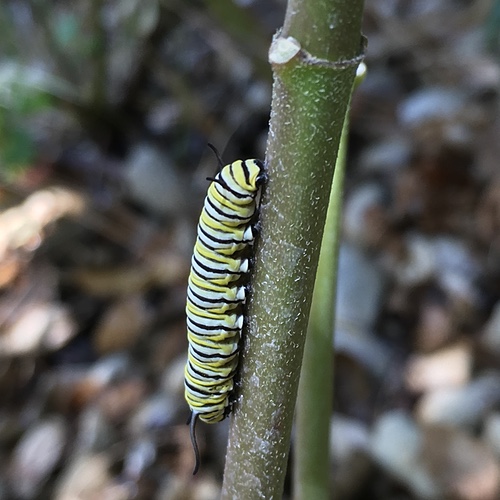
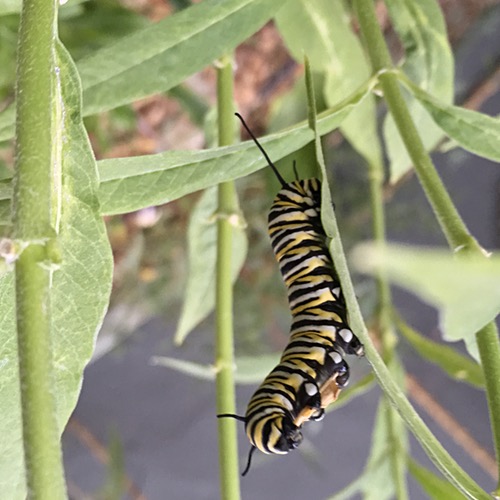
I looked for it for three days. Couldn’t find it until maybe today. I found this caterpillar in the same location.
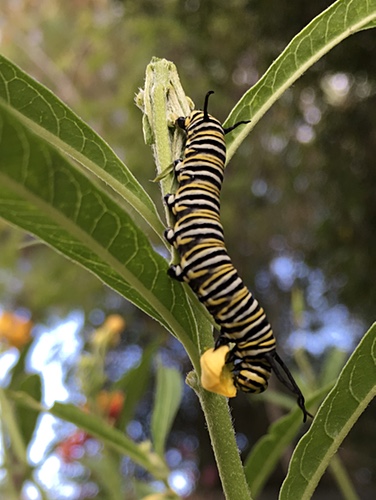
Coincidence or the same caterpillar?
I would like to believe that it is the same caterpillar. That the spray that I used on the milkweed had not harmed it. And it appears that the caterpillar loves the milkweed flowers.
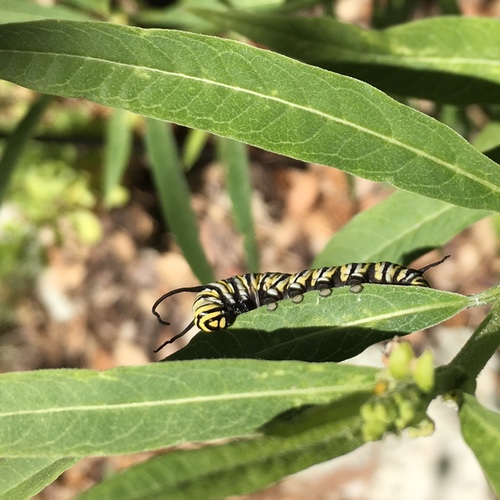
Unfortunately, the spray didn’t take care of the aphid problem. This is what I found today.
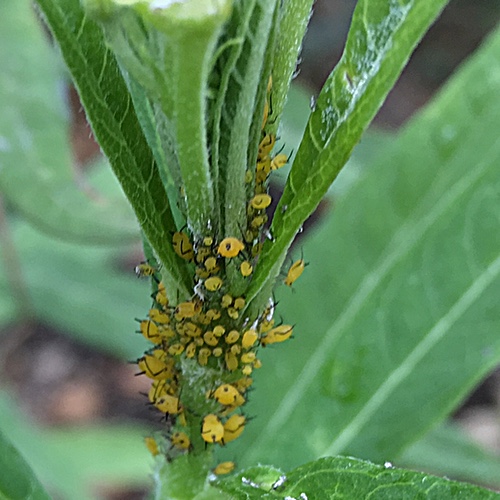
Gosh there are a lot of them, but it is interesting that the bodies are yellow with black legs.
Previous posts on Milkweed and caterpillars–
Monarch Caterpillars and Milkweed
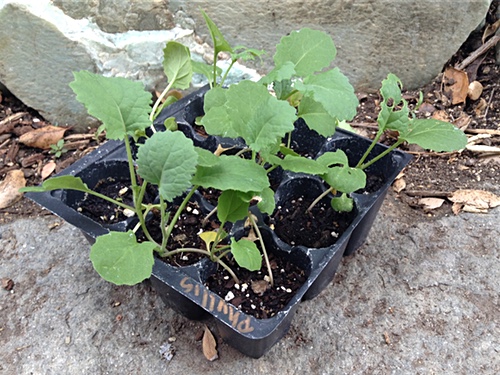
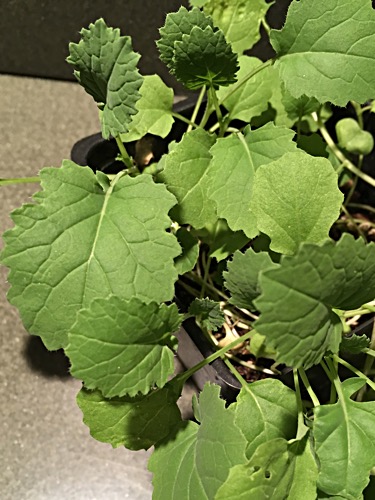
Seedlings From Unidentified Seeds
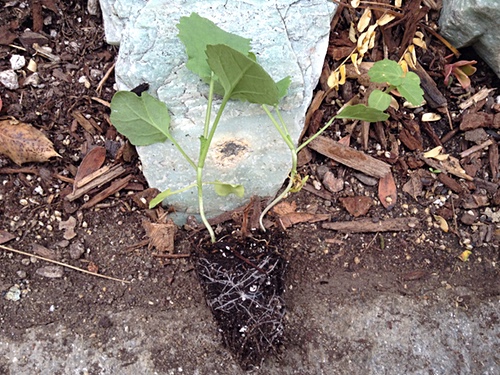
A Seedling Prior to Planting
In order to quickly see the seedlings after planting, I added a small bamboo marker. The markers seemed to disappear into the garden, so I decided to add a bit of color.
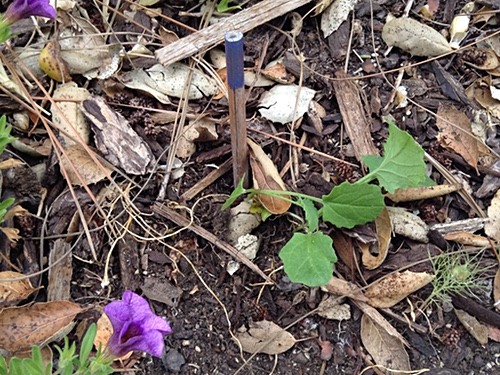
Dipped the Top of the First Bamboo Marker in Paint
Result–Messy
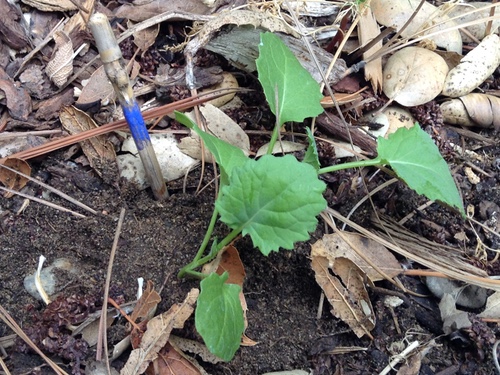
Second Marker–Applied Paint With Brush Below Top to Allow for Finger Hold
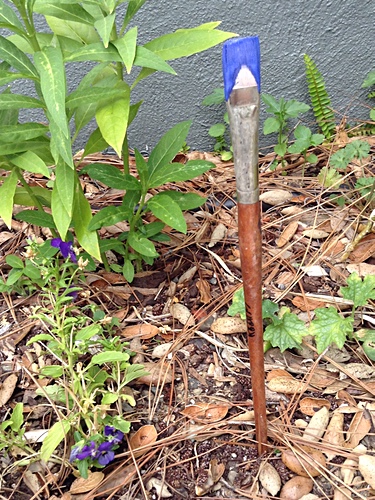
Popped Brush in Ground to Prevent Contamination
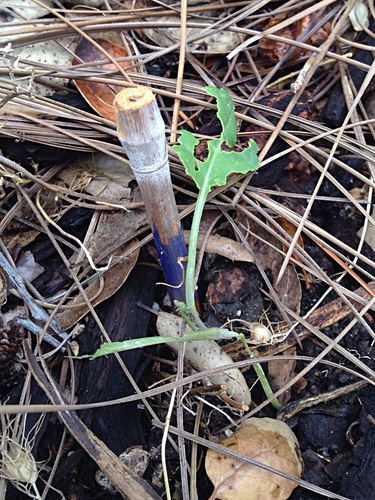
Three Days after Planting
Most of the Seedlings Look Like This
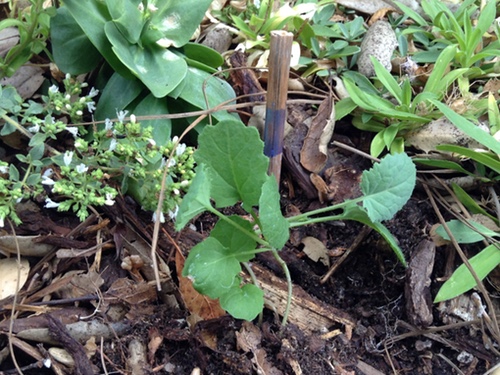
One of Two Survivors
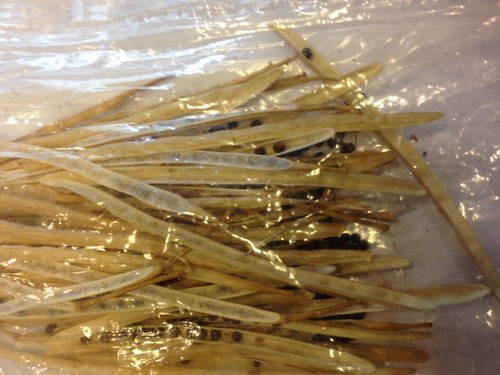
Previous post on a recent attempt to grow plants from the mystery seed followed by a photo of the seed and a plant.
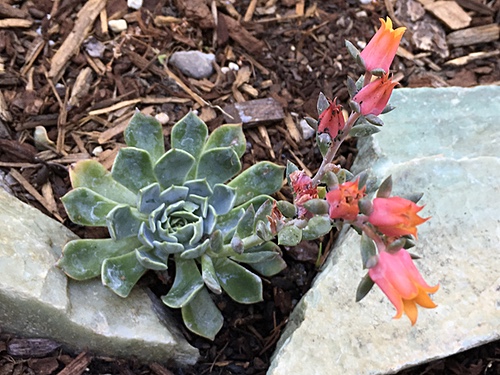
Recently noticed that this plant had aphids.
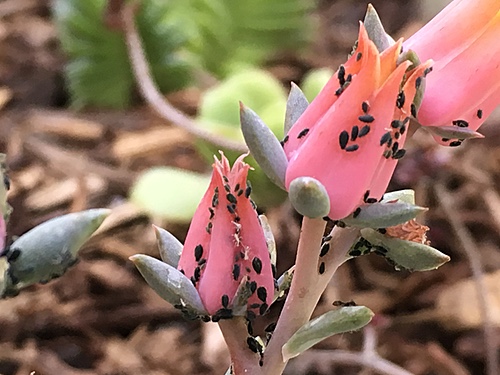
I sprayed the plant with a solution of 8 ounces of water, 8 ounces of alcohol, and 1 tablespoon of Dr. Bronner’s Peppermint Castile Soap.
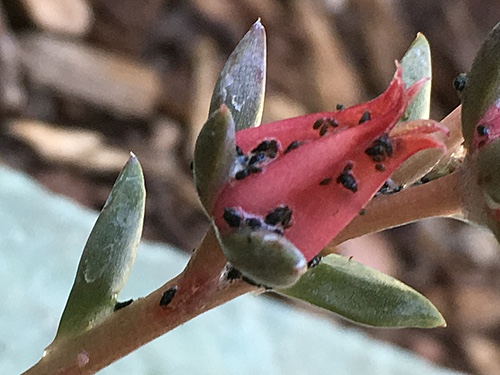
After the Application of Alcohol/Soap Solution
Other Damaged Plants
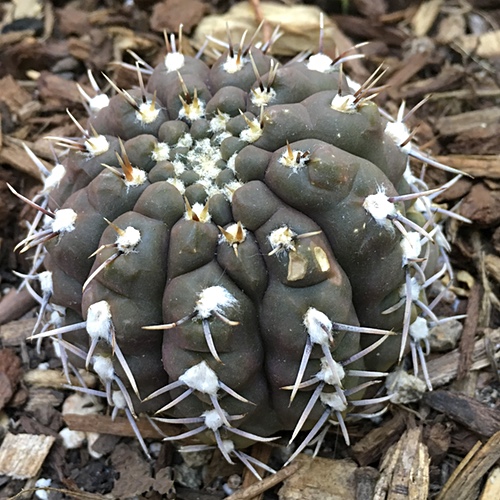
A ding and Suntan
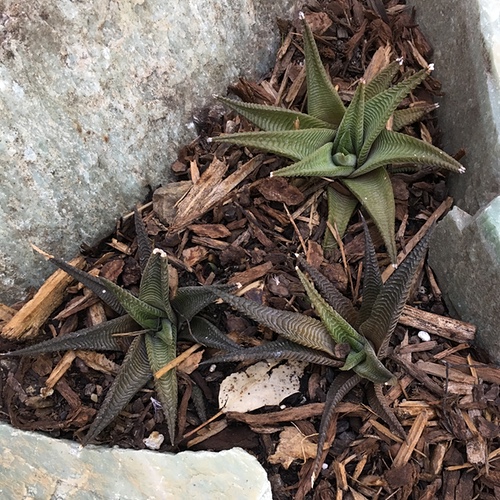
Leaf Tip Damage
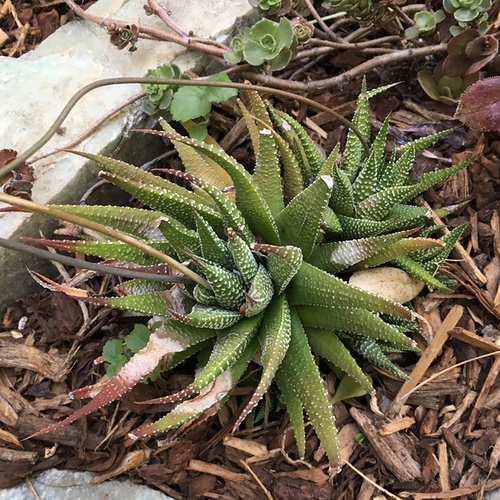
Sun Damage and More
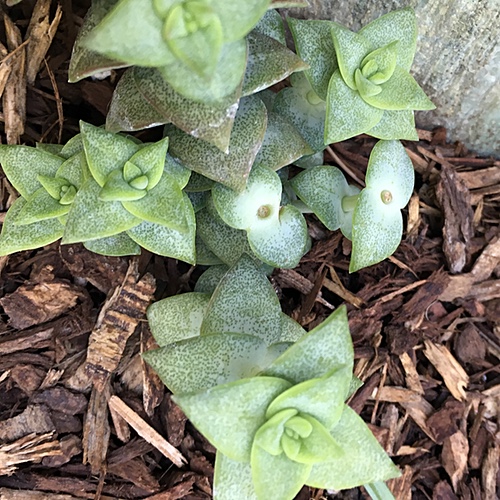
Accidentally bumped this plant and two section fell off. But that isn’t really damage.
It is one way succulents can be propagated.
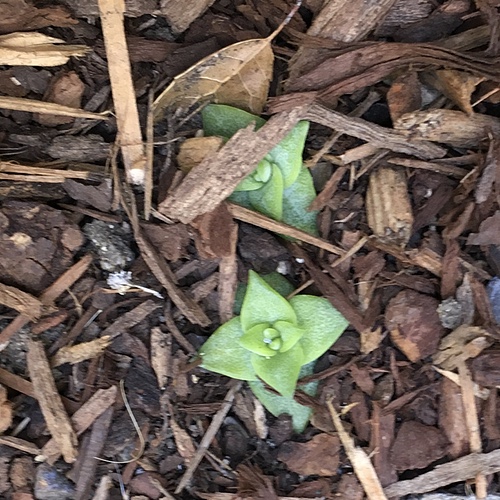
Popped the two pieces in the ground. Now I wait for them to root.
I recently attended the Santa Barbara County Fair in Santa Maria, CA. When I wandered through the horticulture displays I saw a sign for free plants. Plantel Nurseries was giving away vegetable plants. I snagged a few plants-kale, chard, lettuces, and celery.
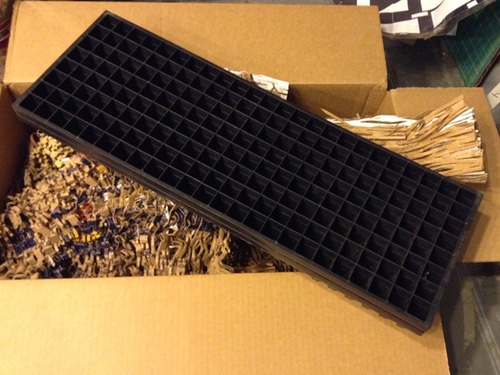
When I returned home I immediately planted them in pots. While I was planting them I got to thinking about the Plantel plant trays. The cells were smaller than those of the typical plant trays available at the neighborhood nurseries.
I visited the Plantel website and was directed to Peaceful Valley Farm Supply.
While I was visiting their site I found the Zenport Ring Knife.
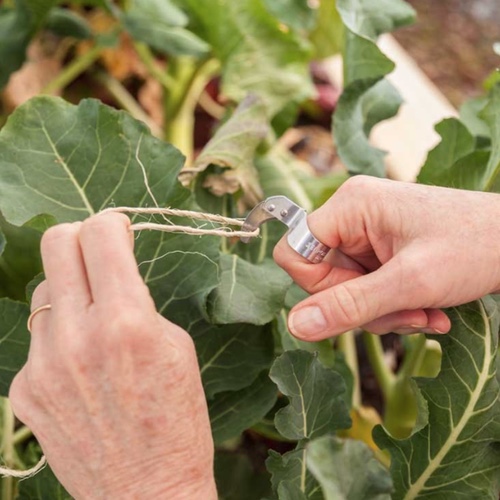
This is an image of the Zenport Ring Knife from the Peaceful Valley Farm Supply website.
I thought that it might be useful when I am working on a project that has loads of binding and cutting of yarn and cord. I wasn’t sure what size to order. One reviewer stated the ring runs small. I ordered two sizes, both were too large. So, I bound them a bit.
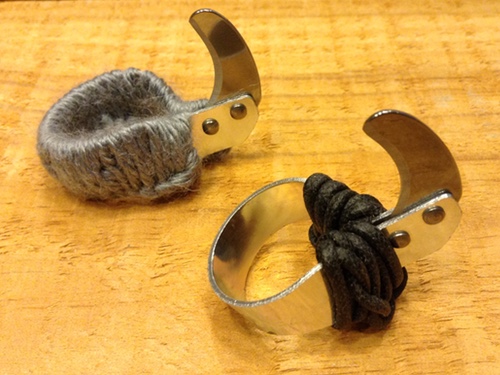
The top ring knife is bound with a bamboo yarn and will be used for clean projects.
The bottom is bound with waxed linen cord for ease of cleaning and will be used for gardening.
Wrapping the ring makes the tool more comfortable to wear.
I am not recommending that anyone else should attempt this at home.
Using tools inappropriately can be dangerous.
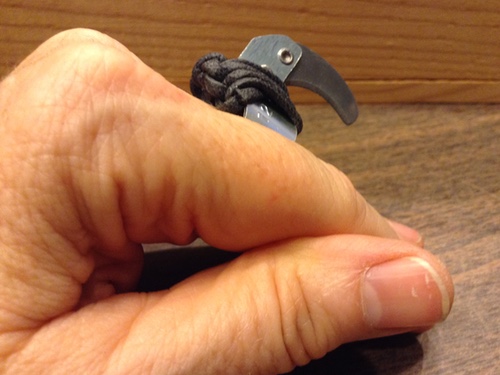
I attempted to use the knife ring as instructed, but it was awkward and difficult.
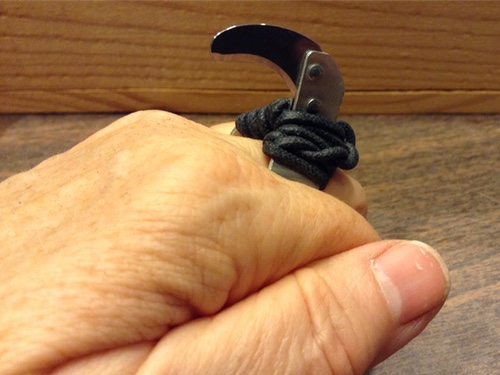
I flipped the ring knife and it was easy peasy cutting. I had better control of the blade.
Even though it appears that the blade can come in contact with my hand, it does not.
I am not recommending that anyone else should attempt this at home.
Using tools inappropriately can be dangerous.
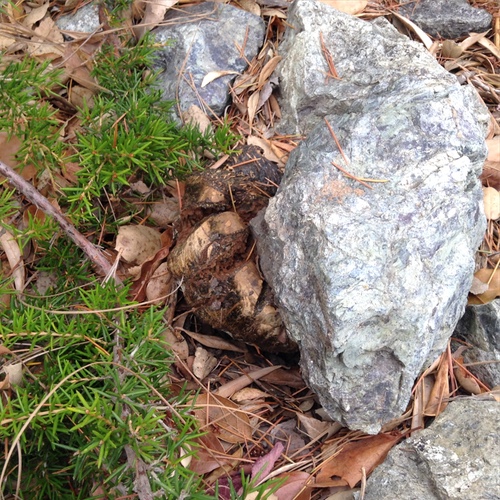
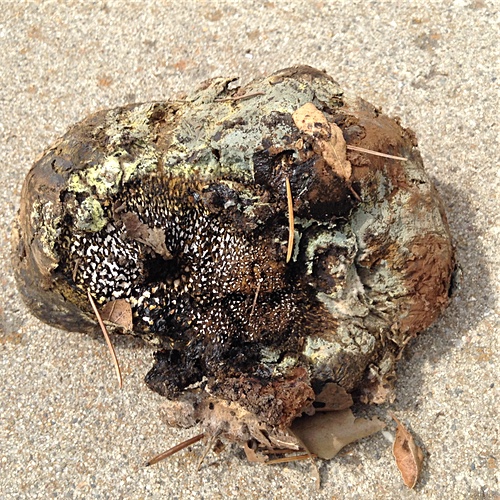
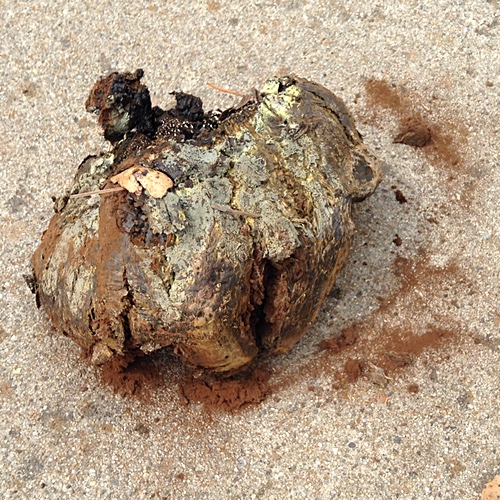
Today I removed the soil from my Taxus to find this–
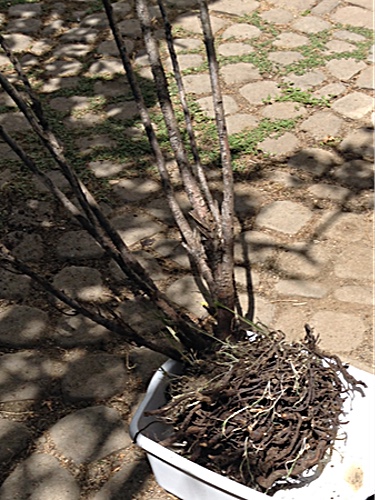
Over 20 years in the ground, with plenty of space to spread its roots.
So, why didn’t it?
Maybe it will become part of an art piece.
Being a vegan is difficult. Reading labels has become a common occurrence whenever I go shopping. A company label can state their product is not tested on animals, but are any of the ingredients used in their product tested on animals? What about their parent company? Do they perform animal testing on other lines? Or do they claim to be cruelty-free, but perform animal tests on products to be marketed in China?
There are animal ingredients tucked into many products. I was looking for a vegan margarine for baking and found that a company lists fish oil as one of its ingredients. It is astounding how often animal ingredients are tucked into products.
Is organic produce sold at the local Farmers’ Market vegan? Maybe not. I asked a couple of farmers and they told me that they use fish emulsion fertilizer.
What is a vegan to do? You just do the best that you can. I have also come to count on the leaping bunny and the certified vegan logos. And websites like Leaping Bunny.
I found this great illustration of cruelty-free logos at The Little Foxes site.

What was the purpose of this post? I was in the local Target looking for a bar of dark chocolate. I happened on this dark chocolate and mint bar.

I love mint, but often anything with mint has egg whites. I didn’t see egg whites on the ingredients list, so I bought it.
When I visited the Equal Exchange Co-Op website, I found that the chocolate bar is vegan! Simple pleasure and also is fair trade.

The Endangered Species, Dark Chocolate with Sea Salt & Almonds bar is also vegan.
One additional fact, combined the two bars were only $5.49. It is not unusual for a vegan chocolate bar to be at least $4-$5 each, sometimes loads more.
Our neighbor gave me a pair of columns that she had been using as part of a table. Each column is 29″ x 8.5″ x 9″ and solid concrete.
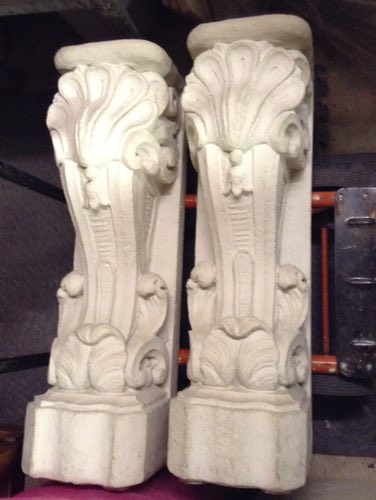
Columns on Hand Truck
Before placing them in the garden I made a couple of decisions. The first…the bottom should be the top.
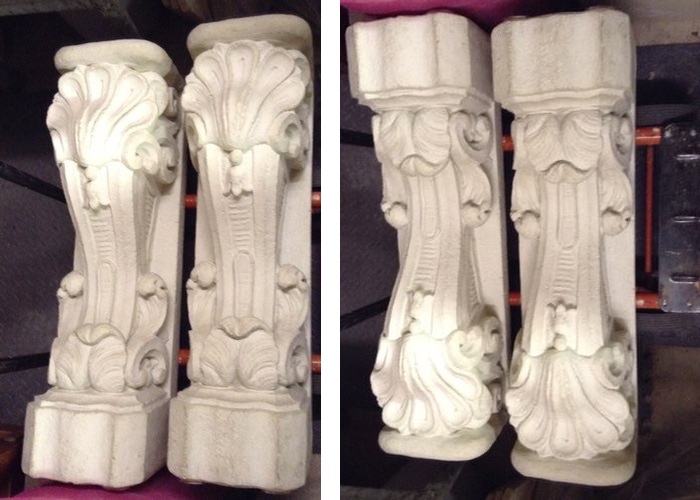
Left Side Was How The Columns Had Been Used
The Right Side is the Proper Orientation
The thin section at the bottom will not be visible. So, the only thing that bothers me is the tulip-like doodad. Just too fussy.

When I began converting the courtyard form exotic plants to drought tolerant plants, one of the first decisions was to remove the wallpieces and to paint the walls grey. It is difficult to tell from the photos taken in my studio, but the columns were too stark, too bright even in the shade.
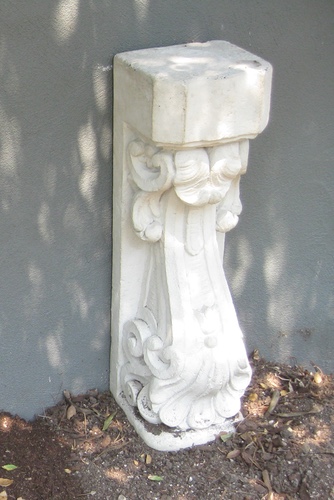
The Whiteness of the Columns is Emphasized When Placed Next to the Grey Wall
Originally I wanted to break off some hunks before aging them, but thought I would wait to see how they looked with a found wood mantel. I snagged some ash from a friend’s actual fireplace to use, if I decide to fix the columns up a bit more.
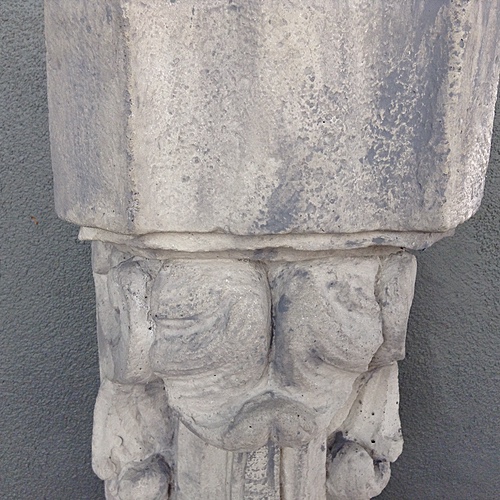
For 4 days, I had 3 pieces of wood stacked on top of the columns to help me decide if three boards had enough visual weight to work with the top of the columns.
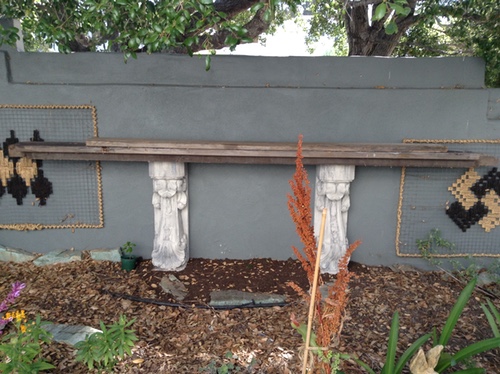
The boards are not quite as wide as the columns. And they could not sit against the wall because of the wallpiece/trellises. Each layer will have two pieces of wood to make the proper width, with a 2″ overhang in the front.
Planning to strap the wood together with metal…aluminum or copper shim. I can patina copper, but the current appearance of the materials is a bit too clean for my typical gritty surface work. The width of the metal will probably be two thirds of the section at the now top of the columns.
When I was making my morning cocoa, thought I would take one last look before cutting the wood.
This is what I found–
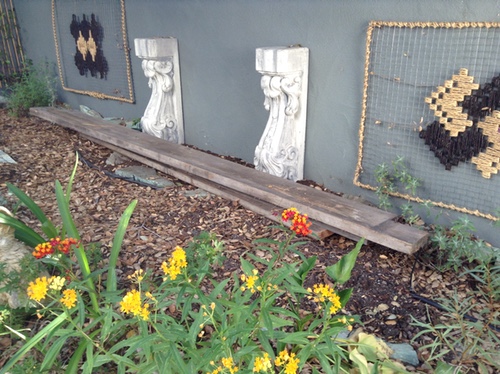
The wood is nicely stacked in the opposite order it had been stacked on the columns. Lucky that the stack did not break plants or the stone defining the space for the hearth.
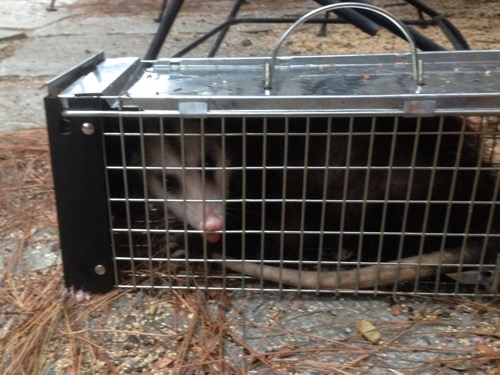
I phoned my husband to inquire if he had moved the wood. He had not. He seems to believe that an animal could have been responsible for the restacking. His best guess–opossum. We did catch a couple opossums over the years in our humane trap when we were attempting to catch squirrels.
This was the most recent captured opossum.
And after it was released–
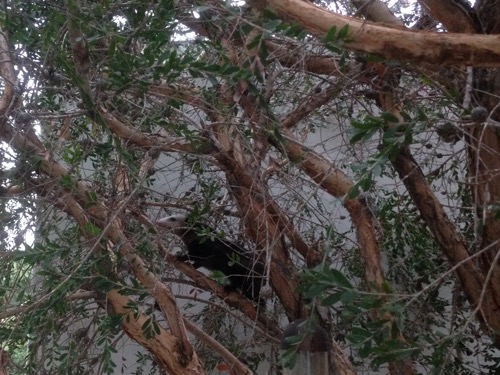
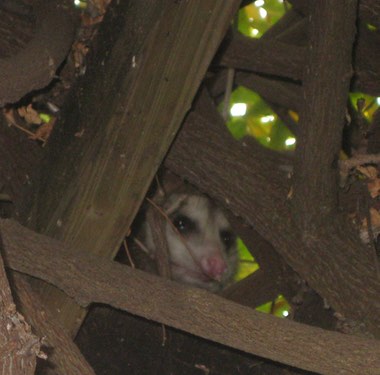
Opossum After Release Stayed in the Wisteria for Several Hours
I restacked the wood on the columns and attempted to reproduce what I found this morning. Every time resulted in a messy stack.
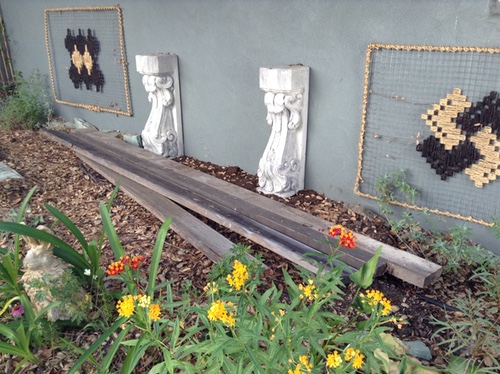
So what did happen? Did an animal (opossum) drop down from the oak tree and cause the restacking?
Curious…
The reddish brown stalk is from a volunteer that I think is a variety of mullein. It is nearly ready to harvest.
I have been fond of mullein since I used it in my Greta piece, part of my MFA exhibition.
An additional note…the garden was sloping when I began planning for the faux fireplace. I leveled it by adding soil that I removed from the now rock/succulent garden. I also added gravel under each of the columns. I had to build up the right side with nearly 4″ of gravel more than uncer the left column.
I leveled the garden area, each column, and the columns together. Then I placed a single piece of wood on the columns and leveled the lot. Pretty sure the faux fireplace will appear level and straight when it is completed.
Can’t wait to see it with snake plant (Sansevieria) inside for faux flames. I have wanted to use snake plant for flames ever since I viewed Blue Velvet.

A Quick Screenshot From the Film Blue Velvet
My plan is to plant the snake plant directly in the garden inside the faux fireplace. The weather is so mild, for the most part, on the California Central Coast. And since they will be protected, they should thrive.
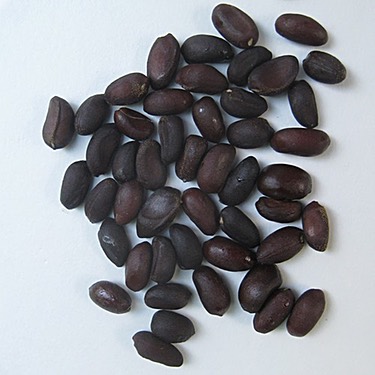
I thought that when I collected seeds from Paeonia plants during a hike in SLO California, I originally thought they were Paeonia brownii. Recently I have come to believe that I made a mistake and the plants were actually Paeonia californica.
This is an image of the seeds I collected.
I went to the Jepson Herbarium to check it out.
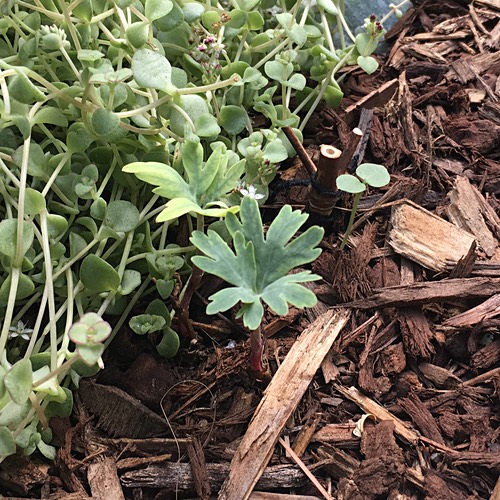
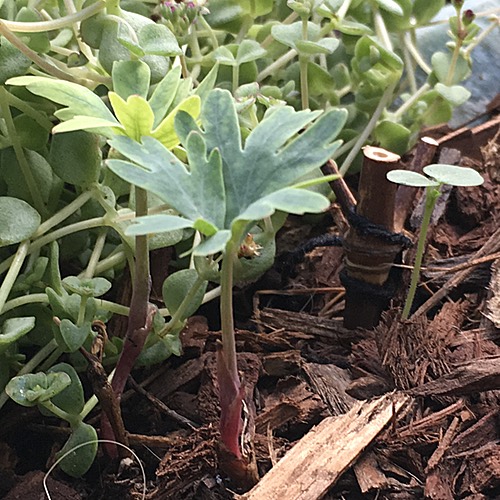
Currently there are a couple of Paeonia seedlings growing in my succulent garden.
California Native Plant Society